
Corrosive Water Wells: Breaking the Cycle of Premature Failure

How a Utah well project shifted from repeated failure to long-term protection.

A Smarter Approach to Water Well Corrosion

In corrosive groundwater environments like Utah and the broader Western U.S., water well corrosion is not a rare issue—it’s an operational expectation.

Wells fail. Components are replaced. And within just a few years, the same failures can happen again.

For many municipalities and operators, this “run-to-failure” approach has become the default—not because it works, but because until recently, there hasn’t been a viable alternative.

This project represents a shift away from that cycle—toward a more durable, engineered approach to water well corrosion protection.

Project Overview: Rebuilding a High-Risk Well System

This case study centers on the rehabilitation of a deep municipal water well in Utah, where highly aggressive groundwater chemistry and dissimilar metals accelerate internal corrosion.

The existing well components had already failed prematurely, requiring a full replacement of internal components. The project team replaced the internal well components while working within an existing steel casing extending approximately 700–800 feet below grade.

New infrastructure included a submersible pump, full-length column piping, and updated internal components designed to improve long-term performance.

At the same time, the team made a critical decision: instead of rebuilding the same system that had already failed, they would address the root cause—internal corrosion.
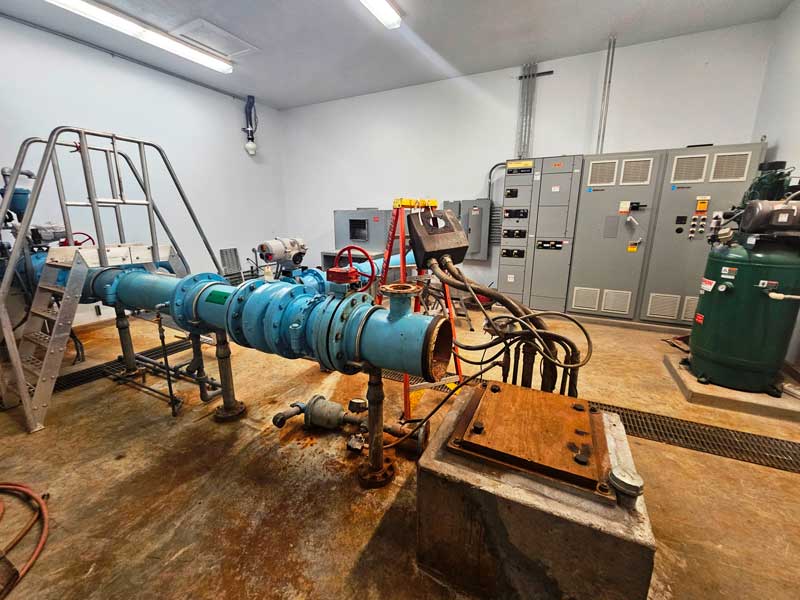
water-well-corrosion-utah-case-study

The Challenge: Water Well Corrosion and Repeated Failure

In high-mineral environments across the region, water well corrosion rapidly degrades internal steel components, which leads to:

  • Structural damage to casing and piping
  • Sand and debris entering the system
  • Premature pump failure
  • Repeated, high-cost interventions

In corrosive environments like this, failure isn’t unexpected—it can become a recurring challenge.

“In these environments, you’re not talking about decades—you’re talking about a few years before major components need to be replaced again.” — Corrosion Engineer

Without intervention, rebuilding the system would have simply restarted the same failure cycle.

The Solution: Certified Cathodic Protection for Water Wells

To break the cycle, the project team implemented the MATCOR ORCA Anode System—an engineered solution for water well cathodic protection.

The ORCA Anode System is an engineered, NSF-61-certified cathodic protection system designed specifically for drinking water environments, helping utilities meet strict safety and compliance requirements while providing long-term corrosion protection.

Rather than accepting corrosion as inevitable, the system was designed to protect internal well components, including the casing and riser pipe, from corrosion within the water column.

Delivered pre-configured to match the well’s specifications, the system integrated directly into the rebuild process without requiring field modifications.

Just as important, the system was built for real-world well conditions—tight annular spaces, long vertical depths, and coordination with standard installation crews.
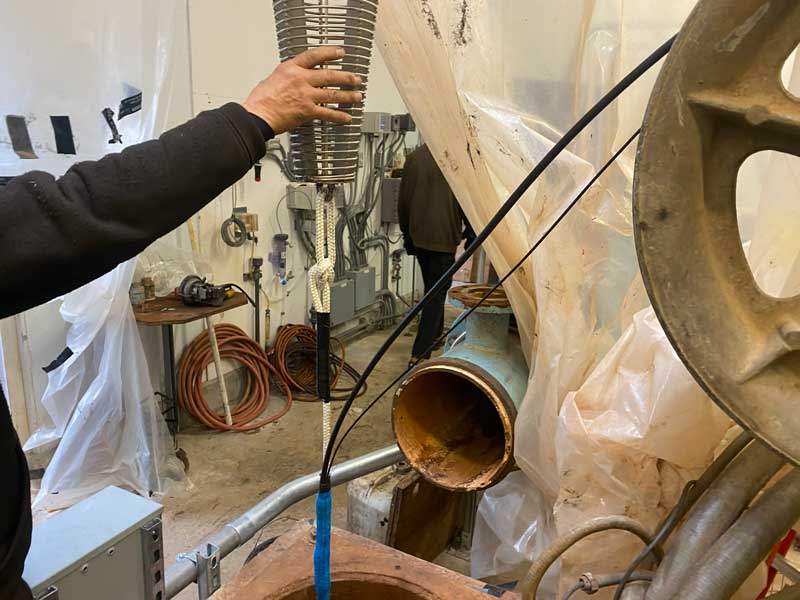
water-well-corrosion-parts-utah-case-study

Internal Protection Within a Complete Corrosion Strategy

The ORCA system is designed specifically for internal corrosion protection within the well—targeting the casing and riser pipe inside the water column.

To fully protect well infrastructure, this approach is typically paired with external systems—such as a deep well cathodic protection system designed to protect the outside of the casing.

Together, these approaches create a complete corrosion management strategy that addresses both internal and external risks.

Implementation: Simpler Than Expected

Despite initial concerns, installation proved straightforward.

The ORCA system was installed alongside the pump column during the normal rebuild process, secured at regular intervals as the assembly was lowered into the well.

“The expectation was that this might slow things down quite a bit. In reality, it was maybe half a day—less than we anticipated.” — Corrosion Engineer

The full well installation took approximately one week, with minimal disruption to the project timeline.

This project demonstrates how well casing cathodic protection can be implemented without adding complexity to standard well construction workflows.

Initial Performance Assessment

While long-term data is still being collected, early performance indicators are strong.

Baseline readings were taken prior to system activation, followed by ongoing monitoring as the system came online. Initial monitoring indicates the system is functioning as intended and polarization levels are increasing toward project protection objectives.

“Initial monitoring results are consistent with project expectations and indicate that the system is responding as designed.” — Corrosion Engineer

Due to the amount of exposed steel in the system, full polarization takes time. However, the ability to monitor performance without removing system components provides additional confidence in long-term reliability.

A Shift in Lifecycle Thinking

This project marks a shift from reactive replacement to proactive asset protection.

In some cases , water wells operate on a cycle of failure and replacement within just a few years. With cathodic protection in place, the goal is to significantly extend the lifespan of internal components.

“If this performs the way we expect, it completely changes how these wells are managed long-term.”

The system is designed to provide long-term corrosion protection. Actual performance will depend on site conditions, water chemistry, operating practices, and ongoing monitoring.

Why This Matters for Water Utilities

For municipalities and operators, this project highlights a practical approach to corrosion control in water utilities.

Instead of continuing the cycle of failure and replacement, engineers can implement targeted corrosion protection strategies that extend asset life, reduce long-term costs, improve reliability, and provide ongoing performance visibility.

This approach also aligns with broader water treatment corrosion control strategies focused on long-term asset preservation.

Just as importantly, water utilities and contractors can implement these solutions using standard contractors and existing workflows.

Looking Ahead

Interest in water well corrosion protection solutions continues to grow, particularly in regions where groundwater chemistry accelerates infrastructure degradation.

Following this installation, additional projects are already being designed using similar approaches.

“There’s a lot of interest in this right now, especially in areas where water quality is driving corrosion issues.”

As more systems are deployed, this approach is expected to play a larger role in how utilities manage long-term infrastructure performance.

Conclusion

Break the cycle of repeated failure with a proactive approach to water well corrosion protection.

Request a consultation to evaluate your system and determine the right cathodic protection solution for your water well.
Why Cathodic Protection Fails in Power Plants (and How to Fix It)

Power plant construction is accelerating—and with it comes increased pressure to ensure long-term reliability of buried infrastructure.

Cathodic protection (CP) plays a critical role in protecting these systems, particularly when properly designed and maintained as part of a broader CP system strategy. In power plant environments, however, performance doesn’t always match expectations.

Understanding why cathodic protection fails in power plants is the first step toward designing systems that perform reliably over time.

These challenges were explored in depth during an AMPP Arizona Chapter presentation by Ted Huck, where real-world examples highlighted how CP behaves differently in power plant environments.

Power Plants Operate Outside the Pipeline Model

CP in pipelines follows well-defined federal regulations. In power plants, however, the expectation shifts to “good engineering practice.”

That distinction changes how systems are designed, installed, and maintained.

Gas-fired power plants rely on buried piping systems that are just as critical as those in regulated pipeline environments. Yet, there is no formal requirement to validate CP performance over time. Long-term protection depends heavily on how well the system reflects actual site conditions.

Why Many Power Plant CP Systems Underperform from Day One

In many cases, cathodic protection systems are installed during construction as part of the overall Engineering, Procurement, and Construction (EPC) scope. These systems often meet project requirements and support handover—but are often not optimized for long-term performance in complex environments and come with very limited warranties.

A common approach is to install galvanic (sacrificial) anode systems with minimal testing infrastructure. It’s simple, requires no external power, and can be installed quickly during construction.

However, they are often treated as “install and forget” systems.

They rely heavily on proper isolation and favorable site conditions to perform as intended. Over time, small changes—such as loss of isolation or unexpected electrical interference—can significantly reduce their effectiveness.

In many cases, plants may receive limited documentation on system performance at turnover, and ongoing validation is not always prioritized.

Over time, these systems may continue to operate—but without delivering meaningful protection to the assets they were intended to protect.

Why Cathodic Protection Fails in Power Plants

CP systems rarely fail because the technology does not work. They fail when real-world conditions interfere with how current is expected to behave.

Extensive grounding systems, complex underground congestion, and fragile isolation all influence how current flows. When these factors are not fully accounted for, performance degrades as real-world conditions begin to influence current flow.

Power plants introduce several of these conditions at once, with failures caused by a combination of design assumptions, installation constraints, and limited visibility after startup.

How Grounding Interference Impacts CP Performance

One of the most common reasons that plant cathodic protection underperforms is grounding interference.

Power plants include large copper grounding networks designed for electrical safety. These systems naturally attract and absorb electrical current.

In practical terms, copper grounding systems require significantly more current to shift in potential than steel—often on the order of 20 times more—which makes them a dominant sink for available CP current.

In a cathodic protection system, that means current often flows toward the grounding grid instead of the intended piping.

The result is reduced polarization on the structure that needs protection.

In effect, the grounding system acts as a preferential path for current, pulling it away from the piping and reducing the system’s ability to achieve effective polarization.

Isolation: A Small Detail with Major Impact

Cathodic protection systems depend on electrical isolation to direct current where it is needed.

In complex plant environments, maintaining isolation across an entire piping network can be difficult, and even a single unintended connection can significantly impact system performance.

When isolation is compromised, performance drops quickly. Additionally, identifying the exact location of the issue can be time-consuming, particularly in complex layouts.

Isolation is not a one-time design feature. It must be verified and maintained over time.

Why Plant CP Systems Stop Working Without Warning

A CP system not working in a power plant typically does not trigger any visible indication.

If performance declines—or stops entirely—there are no alarms, no system shutdowns, and no immediate operational impact.

This is especially true for galvanic systems. Because they don’t rely on an external power source, there is no easy way for plant personnel to confirm whether the system is actively delivering protection. Without routine testing, performance issues go unnoticed.

This creates a situation where:

  • The system appears functional
  • No operational issues are reported
  • Corrosion progresses unnoticed, increasing of asset degradation

An Alternative With Greater Visibility

In contrast, impressed current cathodic protection (ICCP) systems provide greater visibility.

These systems use rectifiers to supply current, allowing operators to monitor voltage and current output. Changes in output can indicate whether the system is functioning as expected, making it easier to identify performance issues early.

This visibility allows plant personnel to quickly identify when system output changes—not possible without field testing in galvanic systems.

Designing for Real-World Conditions

Effective performance starts with acknowledging how power plant environments behave. Cathodic protection design becomes especially important in these environments, where standard assumptions often break down.

System selection also plays a role in long-term performance. While galvanic systems offer simplicity, their low driving voltage makes them more susceptible to interference from grounding systems and other buried infrastructure.

Impressed current systems, on the other hand, provide adjustable output and allow operators to respond to changing conditions over time. In complex power plant environments, this added control can improve long-term reliability—particularly when paired with proper monitoring and testing.

For a broader comparison of cathodic protection methods used in buried piping systems, see our overview of the three primary approaches.

Designing Around Real-World Constraints

Grounding systems will attract current. Underground congestion will create competing pathways. Installation conditions may differ from early assumptions.

Designing around these realities leads to more reliable outcomes than relying on ideal conditions.

In complex industrial sites, successful approaches focus on targeted protection to critical assets, improved current distribution through proximity, and increased testing visibility across the system.

These strategies help maintain performance even when some current loss occurs.

Real-World Performance: Project Brief

In one complex installation, a power plant built on a former industrial site introduced significant challenges due to dense underground infrastructure and extensive steel piling.

Rather than attempting to protect every metallic structure, the system design focused specifically on buried piping. By aligning the anode system with the piping layout and improving monitoring capability, the system achieved consistent protection with significantly lower current demand.

Years later, the system continues to perform as intended without requiring excessive current or ongoing system rework.

This outcome reflects a broader principle: CP systems perform best when design aligns with actual current behavior in the field.

The Bottom Line

Cathodic protection remains one of the most effective tools for protecting buried infrastructure from corrosion—but its success depends on how well it is applied.

In power plants, performance challenges often come from grounding interference, isolation breakdowns, and limited visibility—not from the technology itself.

When teams understand why cathodic protection fails in power plants, they can design systems that:

  • Deliver consistent protection
  • Adapt to complex environments
  • Maintain performance over time

That shift—from theoretical design to real-world application—is what ultimately determines long-term system performance.

If you’re evaluating CP performance in a power plant environment, working with a team experienced in complex system behavior can help identify risks early and improve long-term outcomes.

Contact a Corrosion Expert

Get News from MATCOR

Sign Up for Our Newsletter

  • This field is for validation purposes and should be left unchanged.
    I understand my information will be stored securely for the sole purpose of conducting business with MATCOR, Inc. I agree to receive future email communication and understand that I may opt out at any time. View our Privacy Policy.