Category Archives: Storage Tanks

Tank Cathodic Protection Testing: Overcoming Common Challenges

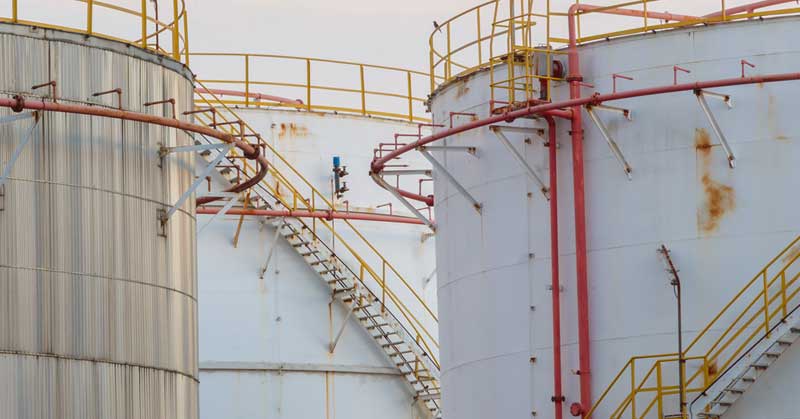
On the surface, applying cathodic protection to a storage tank appears straightforward. However, accurate tank cathodic protection testing is rarely that simple. The reality of validating tank bottom corrosion control is actually far more complex.

Our engineering team recently reviewed the unique obstacles facility managers face when inspecting above ground storage tanks (ASTs). Below, we outline the critical challenges in obtaining accurate compliance data and the key points from that discussion.
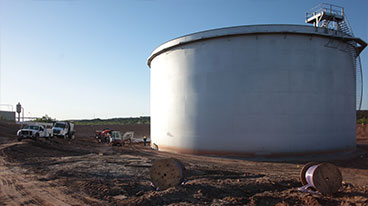
tank cathodic protection testing

Why are above ground storage tank cathodic protection systems difficult to test?

From a macro level, we have a large round structure that sits on an engineered foundation – sounds simple. But the reality is that there are structure issues and electrolyte issues. Add testing challenges to the mix and tank bottom CP system testing is much more difficult than you might initially think.

What issues affect tank CP system performance and testing?

Tank Inventory Level

The inventory level in the tank is one critical issue with tank bottoms. The weight of the tank’s product pushes down on the tank bottom to ensure a more complete contact of that tank bottom with the sand cushion below the tank. The bottom of an empty tank, on the other hand, may flex. As a result, it has less intimate contact with the sand cushion.

Because of this, the potential measurements taken on a full tank are typically less negative than the same readings on that tank when it is empty. We avoid taking readings on out of service tanks. But even for tanks in service, recording the tank level when taking potential readings is a good practice.

When a tank is empty, we see a much higher resistance. The current output is much lower at the same applied voltage, so it is hard to say whether we actually have a higher current density in the areas that remain in contact with the sand.

Tank Isolation Status

Another issue with the structure has to do with isolation. When testing tank bottoms, it is important to check the tank isolation status relative to piping and earthing systems. In many cases, the tank has isolation measures in place to ensure that cathodic protection current is directed at the tank bottom, and is not being picked up from other nearby structures. When testing isolated tanks, it is important to confirm this as part of the testing process.

What are the electrolyte issues that can affect CP system performance and testing?

Tank Sand Bed

Both AMPP (formerly NACE) and API specifications recommend a high quality, high resistance sand cushion for new construction tanks and tank retrofits. The sheer volume of sand material required for just 12” of tank bed can be significant. For a 150 ft diameter tank this can be on the order of 900 tons of material. It will depend on the sand density. This can be upwards of 60 truckloads using large 30,000 lb capacity dump trucks.

Even if the sand comes from the same source, it is not a given that the sand will be entirely uniform and have the same moisture content. In extreme cases, we have seen completely dissimilar sand used in different areas of the same tank.

Once the tank is erected, it is simply not possible to confirm that the tank has a uniform electrolyte.

Moisture Content

Over time, the sand can experience swings in moisture content. And, it is not uncommon to see rainwater and flood water entering the sand foundation. This depends on the quality of the seal chime, and the nature of the tank’s secondary containment system (release prevention barrier and dikes).

Moisture content has a tremendous impact on sand resistivity and can impact cathodic protection performance. The electrolyte may change significantly over time. As a result, any native or depolarized potential readings taken during startup and commissioning cannot be used to assess polarization in subsequent years.

Additional Tank Cathodic Protection Testing Considerations

Access Under the Tank

Taking accurate and repeatable potential measurements over time is critical. Historically, the common practice has been to install fixed reference electrodes under the tank during construction.

Copper-copper sulfate reference electrodes are the most commonly used under tanks. The big problem with this type of reference electrodes is reliability over time. It is not uncommon to see inaccurate potential data within 10-15 years of service.

Tanks typically have a much longer service life than the reference electrodes installed to monitor the CP system performance. On older tanks, there is frequently a mix of “good” reference cells confirming proper CP system operation, along with “bad” reference cells that provide inaccurate readings. As a result, it is difficult to confirm that the tank is meeting criteria.

We have measured stationary electrodes that exhibit erroneous readings after just a few years. In addition, operators consider stationary electrodes inaccurate after one year. This is due to the dry conditions around the cell, not because of the efficacy of the electrode itself.

A Reference Electrode Solution

One solution is to pair the copper-copper sulfate reference electrode with a zinc type reference electrode. Zinc reference electrodes are more stable over time. They can provide effective service for the life of the tank. However, their base potential can vary from one zinc reference electrode to another. Because of this, it is often advisable to bury the zinc reference electrode along side a copper-copper sulfate reference electrode. This way the zinc reference electrode can be “calibrated” against the copper-copper sulfate reference cell.

A Newer Alternative to Fixed Reference Electrodes

We see a growing trend towards the use of micro-slotted PVC pipe as a pull tube. This enables a calibrated reference electrode to be dragged inside the tube to take continuous “profile” readings from one edge of the tank to another. In some cases, this could be a single pull tube, while in other cases two pull tubes are installed to allow taking even more potential measurements.

When taking potential measurements using a pull tube, it is critical to ensure that the electrode in the tube has electrolytic contact to the sand around the tube. In other words, there must be enough water in the tube to facilitate this contact. Additionally, you should use a voltmeter with an input impedance greater than the standard Fluke meter 10 M-ohm resistance . There are several meters available with input impedance of 100 M-ohm and greater.

What is the appropriate criteria requirement be for tank bottom cathodic protection?

The two most applicable criteria would be -850mV Instant-Off potential and the -100mV polarization criteria and when properly applied both are applicable.

-850 mV Off Potential

This criterion can be a challenge to achieve on a large bare structure in a well-aerated environment. Therefore, many times we look to the other applicable criteria which is the 100 mV of polarization criterion.

-100mV Polarization Criteria

Two approaches can be taken using the 100 mV criteria. The first is a formation criterion which is based on comparing the polarized potential to a known baseline, or native, potential. As noted earlier, over time that baseline may no longer be valid for the tank.

The second approach is polarization decay, where the polarized potential is compared to a depolarized potential. The depolarized potential is obtained by removing the current sources and allowing the tank to depolarize for a few days to a few weeks. Again, the depolarized potential may change over time due to changes in the electrolyte. Therefore, collecting a new depolarized potential is recommended during each annual structure-to-electrolyte potential survey.

Heated Tanks

It is important to note that the 100 mV shift criterion is not valid for heated tanks that operate at temperatures above 30ºC (86ºF). Studies have found that heated structures require up to 300 mV polarization. Studies also show that areas with sulfate reducing bacteria (SRB) require similar higher levels of polarization.

Mixed Metal Systems

The 100 mV polarization criterion is also not valid for mixed metal systems. The presence of certain mill scales on steel tank bottoms can create a mixed-metal system. As a result, the validity of the 100 mV criterion may be negated. There is ongoing research into the issue of mill scale.

Finally, as noted above, a multimeter with a higher input impedance should be used when measuring potentials under tanks. For pull tube readings, there is a significant resistance through the tube. For stationary electrodes, there can be significant resistance to the surrounding dry sand, which adds a level of error. A higher input impedance meter helps to reduce this error, but it will not eliminate it.

Tank Cathodic Protection Testing Summary

Tanks can be difficult to test and without the proper training, understanding, and equipment it is all too easy to get an inaccurate picture of the actual performance of the CP system. If your tank CP system does not appear to be working, perhaps a qualified second opinion is warranted before considering more drastic measures.

Contact a Corrosion Expert

[ARTICLE] Cathodic Protection Failure

Restore, replace, extend, or do nothing?

In the Autumn 2022 issue of Tanks and Terminals, MATCOR’s Ted Huck delves into four strategies you can take when your cathodic protection system is no longer working.


MATCOR provides industry-leading cathodic protection and AC mitigation solutions to tank and terminal operators around the globe.


If you need assistance with a cathodic protection assessment, please contact us. We will respond by phone or email within 24 hours. For immediate assistance, please call +1-215-348-2974.

Contact a Corrosion Expert

Is My Tank CP System Working Correctly?


Ted Huck, Director of Manufacturing and QA/QC at MATCOR, recently published an article in the summer edition of Tanks and Terminals Magazine titled “Understanding Cathodic Protection Systems.” He explains how to assess the performance of cathodic protection systems for above-ground storage tank bottoms (Tank CP Systems).

When asked to summarize these performance assessments, Mr. Huck commented, “Tanks are pretty easy to test, except for those rare occasions when they are not. At that point seek professional help.”

Read the full article.


Need information or a quote for MATCOR tank CP systems? Please contact us at the link below.

MATCOR Successfully Completes Tank CP Project In Mexico

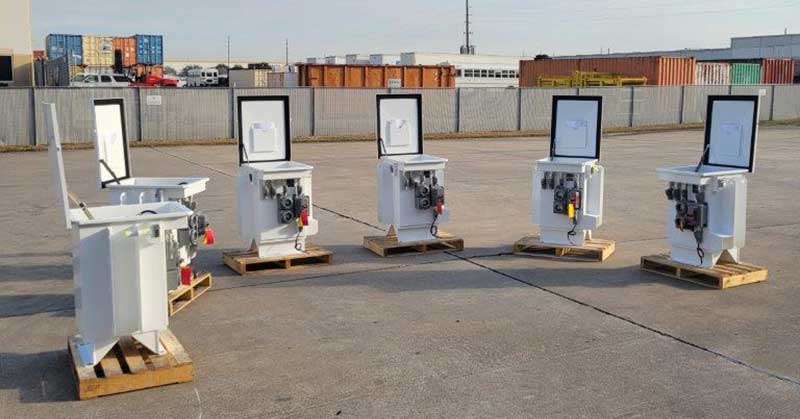
JA Electronics explosion-proof rectifiers for tank CP project in Mexico.

MATCOR recently completed a significant tank CP project in the Mexican port city of Altamira along the Gulf of Mexico. The project consisted of design, detailed engineering, supplying materials, providing installation supervision, and commissioning and testing the systems upon completion of the installation for nine above-ground storage tanks.

Tank CP Project Utilizes Linear Anodes

The cathodic protection system utilized MATCOR’s SPL Linear Anode Concentric Ring tank system that consists of individual, factory assembled, and tested anode segments. This approach facilitates a simple installation that does not require cutting, splicing, or joining anode assemblies in the field. The anode rings utilize a redundant anode cable feed system that assures reliability. This cost-effective solution protects the bottom of tanks on projects across the United States and around the globe.

Explosion Proof Rectifiers

MATCOR also supplied customized explosion-proof oil-cooled rectifiers (pictured above) for each of these tanks from our sister company, JA Electronics. These rectifiers are used in Class 1 Div 2 hazardous areas. Additionally, cast aluminum Class 1 Div 2 junction boxes were also manufactured and supplied by JA Electronics.


Click below to get a quote for your tank CP project, or learn more about MATCOR’s cathodic protection solutions.

Corrosion Control for Water Treatment Facilities

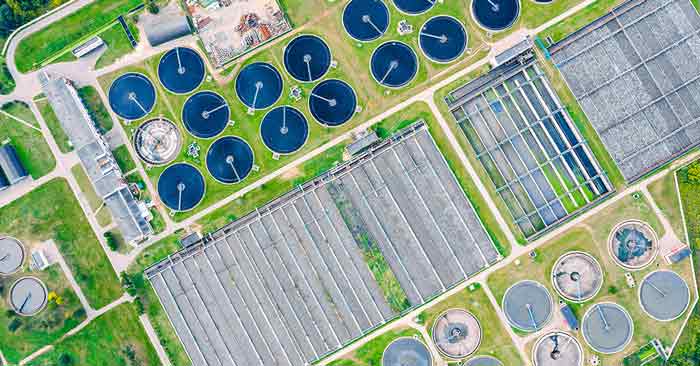
We recently received an inquiry on our cathodic protection FAQ asking about “the best corrosion control protection for above-ground steel tanks treating wastewater.” Well, corrosion control for water treatment facilities is such an interesting and relevant topic that it warrants an expanded response, so here goes.

Wastewater treatment facilities generally have many tanks storing and processing wastewater through multiple treatment stages. These tanks and vessels are subject to corrosion, and there are a range of strategies to extend their service life.

Corrosion control for water treatment facilities' tanks and vessels

Corrosion Protection Strategies for Water Treatment Tanks and Vessels

These strategies fall into four broad categories: material selection, chemical treatment, coatings, and cathodic protection.

Wastewater Tank and Vessel Material Selection

From a material selection perspective, most wastewater treatment vessels are carbon steel. However, some chemical wastewater treatment facilities may require more “exotic” materials early in the treatment process due to the wastewater feed material.

Once the wastewater feed material has been treated and/or neutralized, the remaining process tanks and vessels are likely to be carbon steel construction.

Corrosion Protection via Chemical Treatment

The next broad category of corrosion control strategies is chemical treatment. While chemical treatment is an integral part of the wastewater process, specifically in terms of pH neutralization and chlorination processes, the chemical treatment performed during the treatment of wastewater is not typically intended to control corrosion.

One area where chemical treatment might be a viable corrosion control strategy is with the use of vapor corrosion inhibitors (VCIs) to protect the underside of steel storage tanks.

Coatings for Corrosion Control of Water Treatment Tanks and Vessels

The appropriate selection and application of coatings is a key corrosion control strategy for wastewater treatment facilities.

Coatings are particularly effective in protecting carbon steel structures including above ground piping, atmospheric external tank shells, wetted internal tank walls, submerged steel structures, and many other structures.

Coatings, however, are not perfect and they have a finite life. For structures that are easy to access, inspecting and re-coating are often the sole means applied to protect against corrosion.

Cathodic Protection

The final corrosion mitigation strategy that can be effectively employed to protect wastewater tanks and process vessels is the use of cathodic protection.

Cathodic protection can be used to protect bare steel structures, or in conjunction with coatings.

There are two basic types of cathodic protection, galvanic (often termed sacrificial) and impressed current. Some typical cathodic protection applications in wastewater treatment facilities include protecting the soil side bottoms of large above ground storage tanks and vessels, and protecting the internal wetted surfaces of tanks and process vessels including rotating equipment such as rakes and wiper arms.

MATCOR has extensive experience designing, supplying and installing cathodic protection systems for wastewater tanks and process equipment, including several proprietary impressed current anode systems that are especially well suited for these applications.


Have questions or need a quote for corrosion prevention materials or services? Contact us at the link below. For immediate assistance, please call +1-215-348-2974.

Contact a Corrosion Expert

MATCOR Featured in Tanks and Terminals

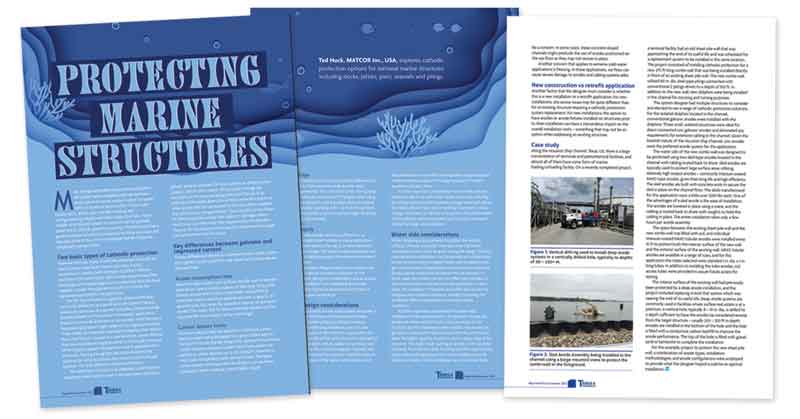
In the June 2021 issue of Tanks and Terminals, a quarterly supplement to Hydrocarbon Engineering, MATCOR’s Ted Huck discusses cathodic protection of terminal marine structures including docks, jetties, piers, seawalls and sheet pilings.

Protecting Marine Structures From Corrosion

The article includes a case story discussion from a Texas gulf coast facility using impressed current cathodic protection for a combi-wall structure (consisting of pipe piles and sheet walls.).

MATCOR provides industry leading cathodic protection and AC mitigation solutions to tank and terminal operators around the globe.

VCI for Tank Bottom Protection

The American Petroleum Institute (API) recently issued a landmark technical report regarding vapor corrosion inhibitor (VCI) use for storage tank bottom corrosion protection (API TR 655).

VCI has been promoted as a technology for use under above-ground storage tanks for the past decade. This effort recently received a big boost with the American Petroleum Institute’s publication of its long-awaited technical report on VCI.

Vapor corrosion inhibitor technology for tank bottom corrosion protection gets boost from API technical report.

API TR 655 Vapor Corrosion Inhibitors for Storage Tanks; First Edition; April 2021 provides the first set of guidelines for VCI issued by an internationally recognized non-governmental technical standards organization.

MATCOR has been an early adopter of VCI technology as we believe that it can be an important and effective component in a corrosion prevention program for tank bottoms. We have partnered with Zerust to be an authorized distributor and installer of VCI products for tank and other applications.

We are excited that API has led the way on recognizing VCI technology, and we would expect that other organizations–AMPP for one–will adopt similar guidelines and recommendations.

For a more detailed review of the technical report, visit our VCI partner company Zerust’s summary at the link below:

Summary of API’s Vapor Corrosion Inhibitor Use for Storage Tank Bottom Protection API TR-655


To get in touch with our team of cathodic protection experts for more information, to ask a question or get a quote, please click below. We will respond by phone or email within 24 hours. For immediate assistance, please call +1-215-348-2974.

Contact a Corrosion Expert

Horizontal Directional Drilling for a Middle East Tank Retrofit

In a recent Tanks & Terminals article, Ted Huck discusses a tank cathodic protection retrofit project in the Middle East utilizing horizontal directional drilling technology.

Existing tanks pose several challenges that must be considered when looking to install cathodic protection, since access directly below the tank is not readily available.

Originally constructed in 1995, the original design of this critical service ethylene storage tank included a cathodic protection system to protect the external tank bottom in contact with the ground. Over time, the system stopped providing enough current to meet NACE criteria for the control of corrosion. 

Discrete Anodes Along the Tank Perimeter Not Satisfactory

The first retrofit cathodic protection system consisted of installing discreet anodes around the perimeter of the tank. While relatively easy to install, this method of retrofit installation often struggles to drive current to the full tank bottom. The results were not satisfactory so another method was needed.

Linear Anodes Installed Using Horizontal Directional Drilling

MATCOR had proposed an alternate approach, successfully being performed in the US but not tried previously in the Middle East. It involves the installation of multiple strings of linear anodes directly below the tank using horizontal directional drilling (HDD) technology. By drilling under the tank, it is possible to install anodes spanning the entire length of the tank. This method also allows for a testing device to measure the effectiveness of the cathodic protection system.

Click below to read the full article regarding this tank retrofit cathodic protection system, installed successfully in December 2019.


If you have questions, or for information on MATCOR’s above ground storage tank cathodic protection solutions, please contact us at the link below.

Contact a Corrosion Expert

Better Tank Cathodic Protection

Looking for a better tank cathodic protection system?

Find our article in the April 2020 Storage Terminals Magazine. “No More Gridlock—Take the Ring Route” is a comparison of grid anode systems vs concentric ring systems for tank bottom cathodic protection.

Cathodic Protection of the external tank bottom for large diameter above ground storage tanks has been adopted as good engineering practice around the world.

Unfortunately, many existing grid anode systems have experienced premature failures, resulting in excessive tank bottom corrosion and costly replacement.

A recent MATCOR article published in Storage Terminals Magazine provides an overview of these grid CP systems and an alternative concentric ring linear anode system (link to the full article below). Here are just a few key points:

Grid Tank Anode Systems

  • Consist of field assembled MMO ribbon anodes and titanium conductor bars
  • Require flawless design and installation
  • Subject to poor welding and other concerns
  • Failures can be catastrophic

Concentric Ring Linear Anode System

  • Factory assembled—no field cutting or splicing required
  • Easy, fast and reliable installation
  • Coke backfilled sock protects the anode
  • Redundant—each ring segment has two feeds
  • Long life compared to the grid systems of the 1990s

If you have questions, or for information on MATCOR’s above ground storage tank cathodic protection solutions, please contact us at the link below.

Contact a Corrosion Expert

Get News from MATCOR

Sign Up for Our Newsletter

  • This field is for validation purposes and should be left unchanged.
    I understand my information will be stored securely for the sole purpose of conducting business with MATCOR, Inc. I agree to receive future email communication and understand that I may opt out at any time. View our Privacy Policy.