All posts by MATCOR

Tank Cathodic Protection Testing: Overcoming Common Challenges

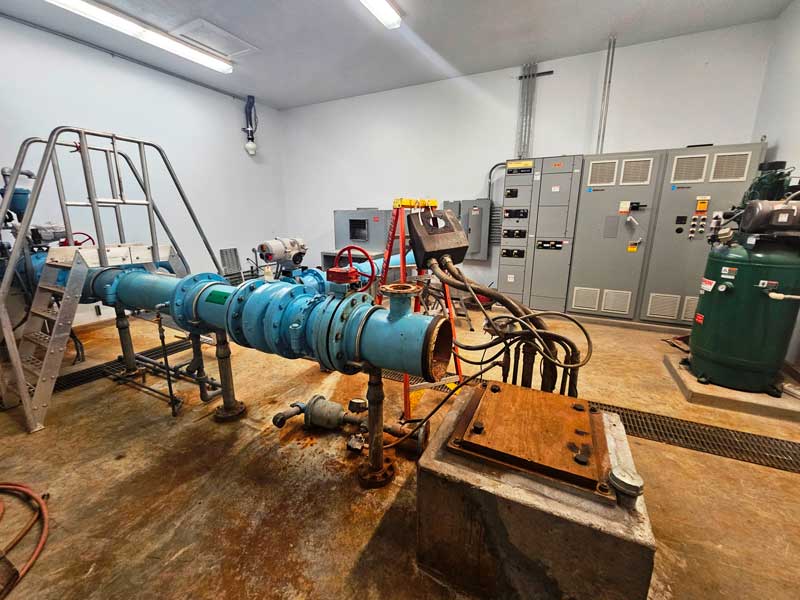
On the surface, applying cathodic protection to a storage tank appears straightforward. However, accurate tank cathodic protection testing is rarely that simple. The reality of validating tank bottom corrosion control is actually far more complex.

Our engineering team recently reviewed the unique obstacles facility managers face when inspecting above ground storage tanks (ASTs). Below, we outline the critical challenges in obtaining accurate compliance data and the key points from that discussion.

tank cathodic protection testing

Why are above ground storage tank cathodic protection systems difficult to test?

From a macro level, we have a large round structure that sits on an engineered foundation – sounds simple. But the reality is that there are structure issues and electrolyte issues. Add testing challenges to the mix and tank bottom CP system testing is much more difficult than you might initially think.

What issues affect tank CP system performance and testing?

Tank Inventory Level

The inventory level in the tank is one critical issue with tank bottoms. The weight of the tank’s product pushes down on the tank bottom to ensure a more complete contact of that tank bottom with the sand cushion below the tank. The bottom of an empty tank, on the other hand, may flex. As a result, it has less intimate contact with the sand cushion.

Because of this, the potential measurements taken on a full tank are typically less negative than the same readings on that tank when it is empty. We avoid taking readings on out of service tanks. But even for tanks in service, recording the tank level when taking potential readings is a good practice.

When a tank is empty, we see a much higher resistance. The current output is much lower at the same applied voltage, so it is hard to say whether we actually have a higher current density in the areas that remain in contact with the sand.

Tank Isolation Status

Another issue with the structure has to do with isolation. When testing tank bottoms, it is important to check the tank isolation status relative to piping and earthing systems. In many cases, the tank has isolation measures in place to ensure that cathodic protection current is directed at the tank bottom, and is not being picked up from other nearby structures. When testing isolated tanks, it is important to confirm this as part of the testing process.

What are the electrolyte issues that can affect CP system performance and testing?

Tank Sand Bed

Both AMPP (formerly NACE) and API specifications recommend a high quality, high resistance sand cushion for new construction tanks and tank retrofits. The sheer volume of sand material required for just 12” of tank bed can be significant. For a 150 ft diameter tank this can be on the order of 900 tons of material. It will depend on the sand density. This can be upwards of 60 truckloads using large 30,000 lb capacity dump trucks.

Even if the sand comes from the same source, it is not a given that the sand will be entirely uniform and have the same moisture content. In extreme cases, we have seen completely dissimilar sand used in different areas of the same tank.

Once the tank is erected, it is simply not possible to confirm that the tank has a uniform electrolyte.

Moisture Content

Over time, the sand can experience swings in moisture content. And, it is not uncommon to see rainwater and flood water entering the sand foundation. This depends on the quality of the seal chime, and the nature of the tank’s secondary containment system (release prevention barrier and dikes).

Moisture content has a tremendous impact on sand resistivity and can impact cathodic protection performance. The electrolyte may change significantly over time. As a result, any native or depolarized potential readings taken during startup and commissioning cannot be used to assess polarization in subsequent years.

Additional Tank Cathodic Protection Testing Considerations

Access Under the Tank

Taking accurate and repeatable potential measurements over time is critical. Historically, the common practice has been to install fixed reference electrodes under the tank during construction.

Copper-copper sulfate reference electrodes are the most commonly used under tanks. The big problem with this type of reference electrodes is reliability over time. It is not uncommon to see inaccurate potential data within 10-15 years of service.

Tanks typically have a much longer service life than the reference electrodes installed to monitor the CP system performance. On older tanks, there is frequently a mix of “good” reference cells confirming proper CP system operation, along with “bad” reference cells that provide inaccurate readings. As a result, it is difficult to confirm that the tank is meeting criteria.

We have measured stationary electrodes that exhibit erroneous readings after just a few years. In addition, operators consider stationary electrodes inaccurate after one year. This is due to the dry conditions around the cell, not because of the efficacy of the electrode itself.

A Reference Electrode Solution

One solution is to pair the copper-copper sulfate reference electrode with a zinc type reference electrode. Zinc reference electrodes are more stable over time. They can provide effective service for the life of the tank. However, their base potential can vary from one zinc reference electrode to another. Because of this, it is often advisable to bury the zinc reference electrode along side a copper-copper sulfate reference electrode. This way the zinc reference electrode can be “calibrated” against the copper-copper sulfate reference cell.

A Newer Alternative to Fixed Reference Electrodes

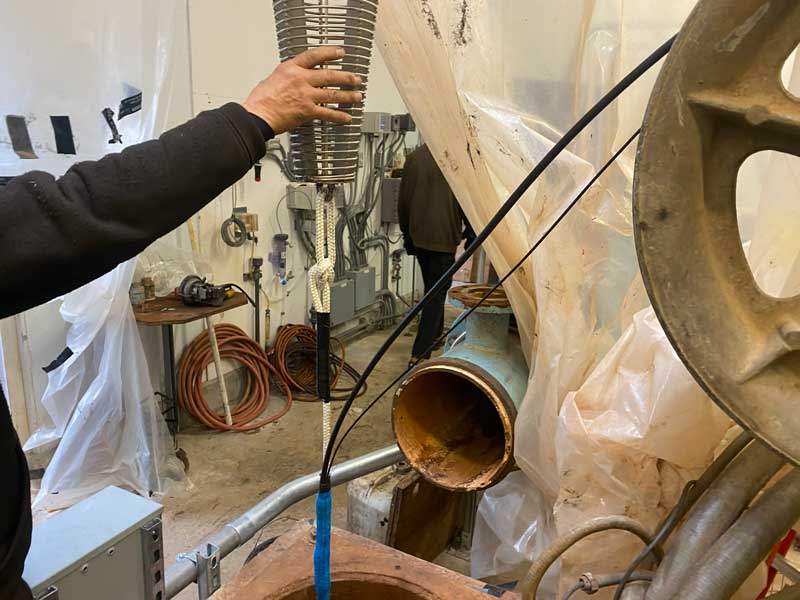
We see a growing trend towards the use of micro-slotted PVC pipe as a pull tube. This enables a calibrated reference electrode to be dragged inside the tube to take continuous “profile” readings from one edge of the tank to another. In some cases, this could be a single pull tube, while in other cases two pull tubes are installed to allow taking even more potential measurements.

When taking potential measurements using a pull tube, it is critical to ensure that the electrode in the tube has electrolytic contact to the sand around the tube. In other words, there must be enough water in the tube to facilitate this contact. Additionally, you should use a voltmeter with an input impedance greater than the standard Fluke meter 10 M-ohm resistance . There are several meters available with input impedance of 100 M-ohm and greater.

What is the appropriate criteria requirement be for tank bottom cathodic protection?

The two most applicable criteria would be -850mV Instant-Off potential and the -100mV polarization criteria and when properly applied both are applicable.

-850 mV Off Potential

This criterion can be a challenge to achieve on a large bare structure in a well-aerated environment. Therefore, many times we look to the other applicable criteria which is the 100 mV of polarization criterion.

-100mV Polarization Criteria

Two approaches can be taken using the 100 mV criteria. The first is a formation criterion which is based on comparing the polarized potential to a known baseline, or native, potential. As noted earlier, over time that baseline may no longer be valid for the tank.

The second approach is polarization decay, where the polarized potential is compared to a depolarized potential. The depolarized potential is obtained by removing the current sources and allowing the tank to depolarize for a few days to a few weeks. Again, the depolarized potential may change over time due to changes in the electrolyte. Therefore, collecting a new depolarized potential is recommended during each annual structure-to-electrolyte potential survey.

Heated Tanks

It is important to note that the 100 mV shift criterion is not valid for heated tanks that operate at temperatures above 30ºC (86ºF). Studies have found that heated structures require up to 300 mV polarization. Studies also show that areas with sulfate reducing bacteria (SRB) require similar higher levels of polarization.

Mixed Metal Systems

The 100 mV polarization criterion is also not valid for mixed metal systems. The presence of certain mill scales on steel tank bottoms can create a mixed-metal system. As a result, the validity of the 100 mV criterion may be negated. There is ongoing research into the issue of mill scale.

Finally, as noted above, a multimeter with a higher input impedance should be used when measuring potentials under tanks. For pull tube readings, there is a significant resistance through the tube. For stationary electrodes, there can be significant resistance to the surrounding dry sand, which adds a level of error. A higher input impedance meter helps to reduce this error, but it will not eliminate it.

Tank Cathodic Protection Testing Summary

Tanks can be difficult to test and without the proper training, understanding, and equipment it is all too easy to get an inaccurate picture of the actual performance of the CP system. If your tank CP system does not appear to be working, perhaps a qualified second opinion is warranted before considering more drastic measures.

Contact a Corrosion Expert

The Race to AI Supremacy and How it Threatens Our Pipelines

At the June AMPP Arizona Chapter Meeting, MATCOR’s Ted Huck delivered a powerful and eye-opening presentation titled “The Race to Artificial Intelligence (AI) Supremacy and How it Threatens Our Pipelines.” The session highlighted the connection between the global competition for AI dominance, skyrocketing energy demands, and a growing threat to pipeline integrity across the United States.

If you missed it, here’s a recap of the key insights and takeaways.

The AI Boom is Power-Hungry

Artificial intelligence isn’t just changing technology—it’s reshaping our entire power infrastructure. Data centers, driven by AI, cloud computing, and social media storage, are expanding at an unprecedented pace. According to Huck, these facilities already consume 4–5% of U.S. electricity, and that number could jump to 15–20% within five years.

The global race among countries to scale AI capacity is essentially a race to build and power massive new data centers. In the U.S., natural gas—already accounting for about 45% of electricity generation—is expected to drive most of the growth, as coal continues its steep decline and nuclear struggles to rebound. In contrast, other countries are doubling down on coal, approving over 100 gigawatts of new coal-fired capacity. They are also building coal plants faster than the U.S. can build gas plants—giving them a potential edge in scaling data centers faster.

More Power = More Problems

With rising energy demand comes the need for more power plants and thousands of miles of new high-voltage transmission lines. Many utilities are expanding capacity not only by building new lines but also through “reconductoring”— upgrading existing lines to carry twice the electrical load with no major visible infrastructure changes.

What does this mean for pipeline operators?

You won’t get a phone call when the power load in your right-of-way doubles.

As Huck emphasized, power companies are under no obligation to inform you when they increase the electrical load on transmission lines. One MATCOR client installed a mitigation system just three years ago—only to discover massive increases in AC interference due to a nearby data center and reconductor line. Their existing system was suddenly inadequate, and no one warned them.

Co-location is the New Norm

Today’s utility corridors are getting more crowded. Pipelines and power lines are increasingly co-located, sharing the same physical space. This increases the risks of:

  • Conductive coupling from fault currents
  • Electromagnetic induction from steady-state AC loads
  • Elevated AC current densities that accelerate corrosion

Huck warned that even pipelines with few defects can experience high localized current densities—especially if CP systems aren’t designed to maintain uniform protection across high-risk areas.

The New Standard: NACE SP21424

A major portion of the presentation focused on the implications of NACE SP21424, the evolving standard for AC interference and corrosion.

Unlike previous guidance, SP21424 links allowable AC current density to measured DC current density, requiring a shift in how pipeline integrity is monitored and designed. It introduces several new expectations:

  • Measurement of DC current density, something rarely done before
  • Use of coupons and smart test stations to track time-weighted averages
  • Immediate mitigation installation for new pipelines in AC-influenced areas
  • Separate CP systems in areas of high risk for tighter control and faster response

Operators are now expected to collect, store, and interpret data over time—not just take snapshots during annual surveys. And yet, key terms like “time-weighted average” and “representative monitoring periods” remain undefined, placing the burden on operators to proactively set thresholds within their integrity programs.

Smart Monitoring = Better Protection

To keep up with rising threats, Huck urged operators to:

  • Install more CP stations at lower outputs to reduce high DC current density
  • Implement dedicated CP systems for AC-influenced zones
  • Upgrade test stations with dual AC/DC coupons and remote monitoring
  • Define your own time-weighted thresholds in advance—don’t wait for regulators

With widespread reconductoring, new power plants, and surging energy demands, these recommendations aren’t just best practices—they’re becoming essential for risk mitigation.

Bottom Line: AC Mitigation Can’t Wait

“The power utility isn’t going to notify you,” Huck reminded attendees. “It’s on operators to monitor, detect, and respond to changing conditions—before they become serious problems.”

The growth of AI isn’t just a tech trend. It’s a pipeline risk multiplier.

As energy demands surge, so do the risks to pipeline infrastructure—especially from AC interference. Learn more about AC mitigation and explore MATCOR’s full range of pipeline AC mitigation services.

[CASE STUDY] How MATCOR Delivered a Critical AC Mitigation Project—Ahead of Schedule and Powered by Teamwork

How MATCOR’s expert team completed a critical 20,000-foot mitigation project ahead of schedule—with zero incidents.

What is AC Mitigation and Why Does It Matter?

Pipelines that run near high-voltage AC transmission lines are at risk for electrical interference that can cause dangerous fault-induced voltage spikes, AC-induced corrosion, and personnel safety hazards from step and touch voltages. Traditionally, mitigation was installed manually using zinc ribbon—but technology has advanced.

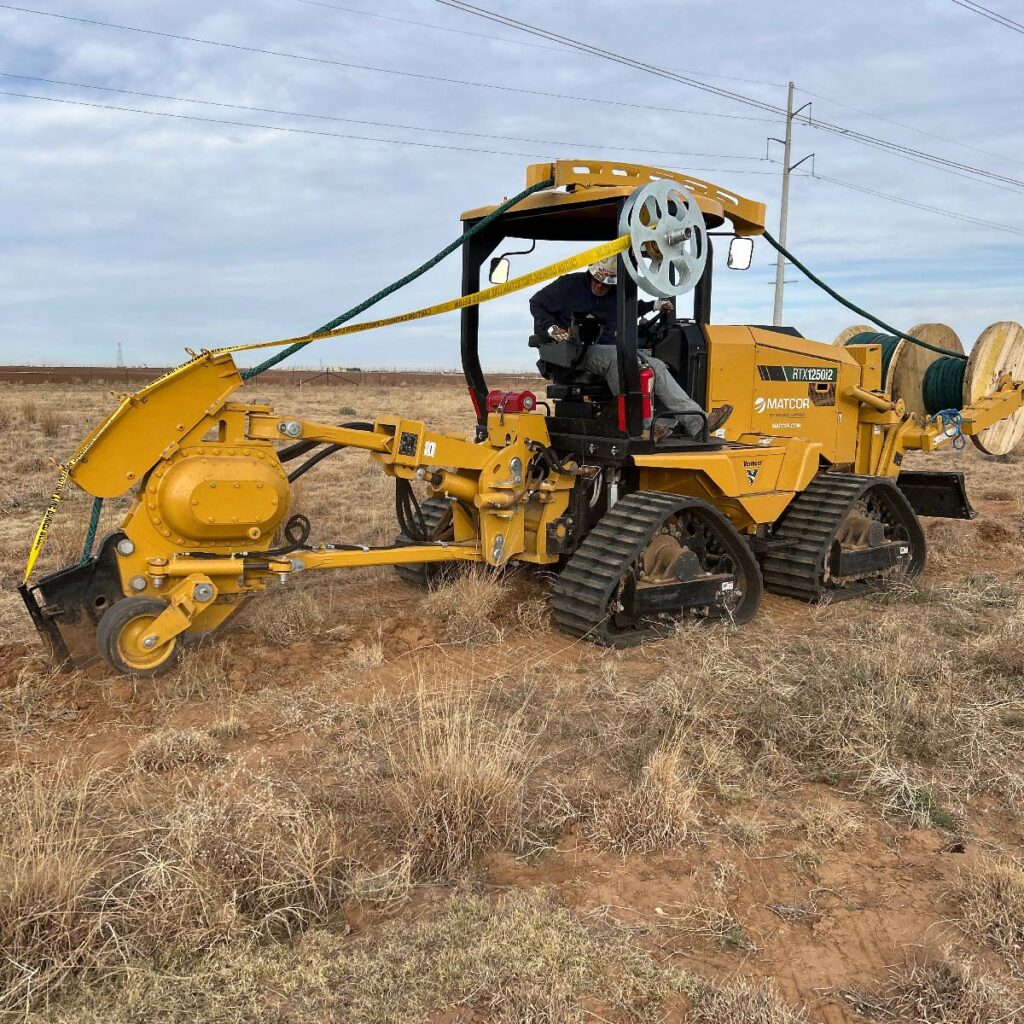
“It used to be done manually with zinc ribbon. Now, with MATCOR’s trencher and spool system, it’s safer, faster, and more efficient,” Amanda explains.

Why AC Mitigation is Becoming More Urgent

AC mitigation is more than a compliance requirement—it’s becoming a strategic priority. The rapid expansion of high-voltage infrastructure to support massive new data centers and power plants across the U.S. is increasing the overlap between pipelines and transmission corridors.

“The race to AI dominance is fueling construction of data centers—huge energy consumers—which require new power plants and transmission lines,” noted Ted Huck. “That means more interference risks for existing pipelines.”

Even pipelines with recent mitigation studies in place can quickly become vulnerable. One operator saw significant interference issues just two years after mitigation—after a nearby fulfillment center and transmission line were added.

This trend is accelerating. Over the next five years, the U.S. is projected to build more than 250 power plants. That means more AC exposure, more co-located corridors, and a greater need for proactive mitigation strategies.

Want to dive deeper into this growing challenge? Read the full recap of Ted Huck’s presentation on “The Race to AI Supremacy and How it Threatens Our Pipelines” here.

Project Overview

In early 2025, MATCOR was tasked with a major AC mitigation project by a longstanding pipeline operator in the West Texas region—an area rich in oil and gas infrastructure and notorious for its complex pipeline crossings. The operator had previously relied on zinc ribbon, and selected MATCOR’s Mitigator® for this installation.

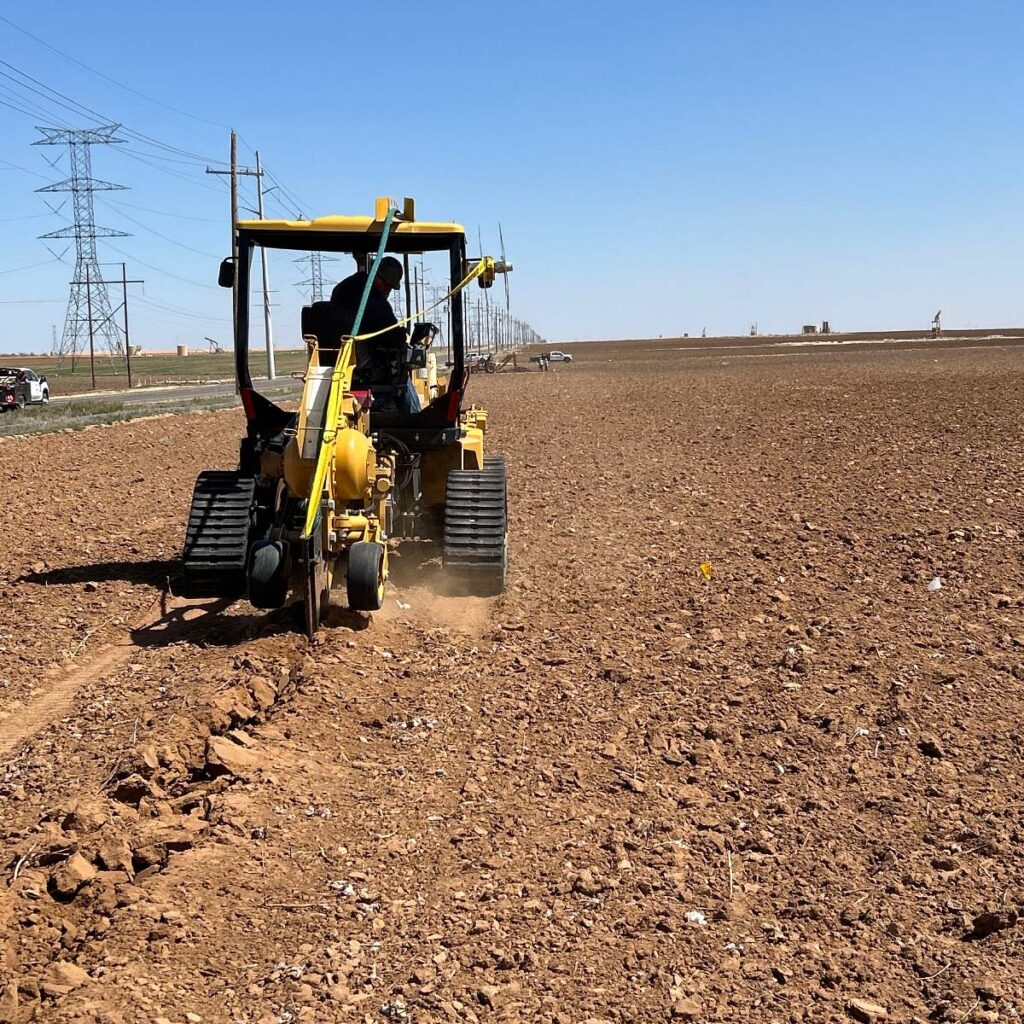
The job involved installing nearly 20,000 feet of Mitigator in challenging terrain, across farmland, and under tight deadlines.

For Amanda Miller, Project Manager at MATCOR, this was one of her first large-scale projects since joining the company. It also became one of the most rewarding.

“Everyone thought there’d be hiccups. But we finished 15 days early, and the customer was blown away.”

The Challenge

With only 32 days to complete the project—and landowner coordination, irrigation systems, and active pipeline crossings to navigate—everyone expected delays. But the MATCOR team delivered faster than anyone anticipated.

“We were able to complete the project in just 17 days thanks to strong planning, constant communication, and full team alignment,” Amanda said. “From the field crew to upper management, everyone came together.”

Why the Client Chose the Mitigator Over Zinc Ribbon

Although the client had previously used zinc ribbon for AC mitigation, they selected MATCOR’s Mitigator system for this project—marking a shift toward a more engineered, long-term solution.

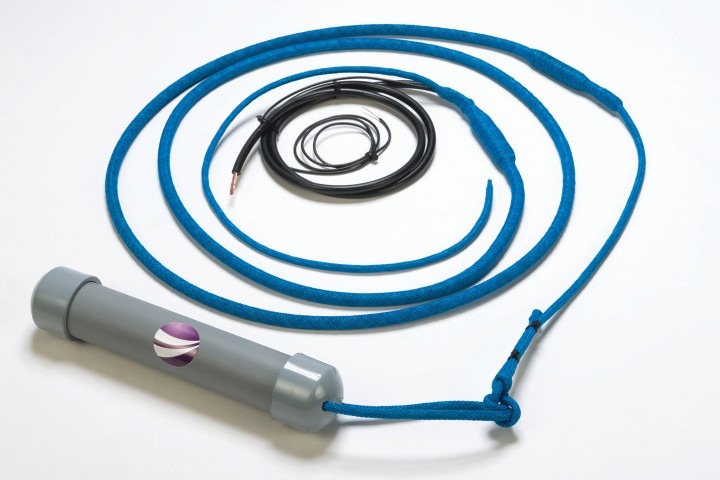
The Mitigator is the industry’s only engineered grounding system designed specifically for AC mitigation. It combines high-performance materials with corrosion-inhibiting backfill in a sealed, ready-to-install package.

Key Benefits:

  • 433% more surface area than bare copper
  • Stranded copper conductor for superior electrical performance
  • Corrosion-inhibiting backfill to extend system life
  • Durable fabric wrap with heavy-duty braiding
  • Low resistance to earth for effective grounding
  • Ships on reels, ready for rapid installation

What Made It Work

  • All-in-one MATCOR crew: Unlike others in the field, MATCOR handled the full installation in-house. No subcontractors. No guesswork.
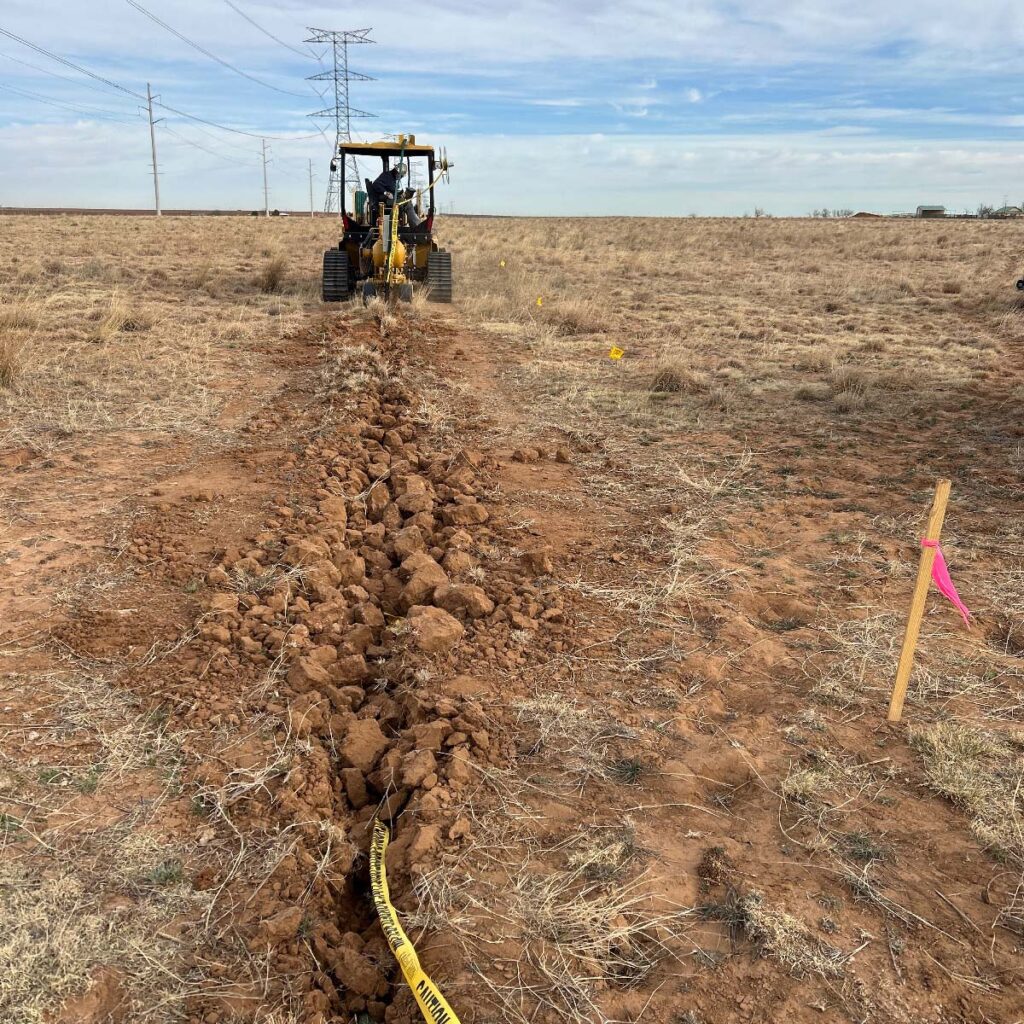
  • Trencher + spool system: The Mitigator—designed and manufactured by MATCOR—was deployed using a specialized trencher that simultaneously laid the product and caution tape, streamlining the process.
  • Client collaboration: Daily check-ins, a robust kickoff meeting with 15 client-side stakeholders, and real-time feedback helped build trust and showcase MATCOR’s commitment to safety and efficiency.
  • Rapid problem-solving: Whether it was switching between CAD welding and pin brazing, sourcing cattle guards in under a week, or navigating high winds, every issue was solved within a day.
  • Field mentorship: Josh Robertson led installation in the field while rotating crew members through training—passing on deep technical knowledge in real time.

Safety and Quality First

Despite the fast pace, safety was never compromised.

“We had high-level representatives on-site every day. They told us they couldn’t even tell we’d been there after 5,000 feet,” Amanda recalled. “That’s how clean and safe our work was.”

Results

  • Project completed 15 days early
  • Zero safety incidents
  • No line strikes or utility hits
  • Full client satisfaction and interest in additional projects

A Team Culture That Shows

Amanda credits the company’s leadership—Chuck Parrish, Brad Waters, Dennis Coldiron, and others—for creating a culture where everyone, regardless of level, supports each other.

“It’s the most supportive team I’ve ever worked with. From the top down, it’s never ‘not my job.’ It’s ‘how can I help?’ That made all the difference.”

Ready to Protect Your Pipeline with Proven AC Mitigation?

MATCOR’s industry-leading approach combines decades of expertise, purpose-built equipment, turnkey services, and a culture of safety and precision. Whether you’re in early planning or facing an urgent project deadline, we’re here to help you get it done—on time and with confidence.

Contact us today to talk through your next AC mitigation project.

Contact a Corrosion Expert

MATCOR’s PF™ Anode Achieves NSF-61 Certification for Safe Water System Cathodic Protection

Chalfont, PA – MATCOR, Inc., a BrandSafway company and a leader in cathodic protection and AC mitigation solutions, proudly announces that its PF™ Anode is now officially NSF/ANSI 61 certified, ensuring its compliance for potable water applications. This certification validates the PF Anode’s safety for drinking water systems and underscores MATCOR’s commitment to delivering corrosion prevention solutions that meet the industry’s highest standards.

matcor pf anode

The PF™ Anode is designed to prevent corrosion in water tanks, wells, and storage facilities. Featuring mixed metal oxide (MMO) technology, chlorine-resistant Kynar® braiding, and versatile installation options, it provides long-lasting and reliable protection for drinking water infrastructure.

“NSF-61 certification is a significant milestone,” said Ted Huck, Director of Sales at MATCOR. “Customers can trust the PF Anode as a safe, effective, and fully compliant solution for protecting water systems.”

For more information about the PF Anode or MATCOR’s cathodic protection and AC mitigation solutions, visit matcor.com.


To get in touch with our team of cathodic protection and AC mitigation experts for more information, to ask a question or get a quote, please click below. We will respond by phone or email within 24 hours. For immediate assistance, please call +1-215-348-2974.

Contact a Corrosion Expert

Three Methods for Corrosion Prevention of Buried Plant Piping in New Construction

Pipe Cathodic Protection | Cathodic Protection for Underground Piping | Steel Pipe Corrosion Protection Methods
Steel Pipe Corrosion Protection Methods: Deep Anode, Shallow/Distributed Anode Bed and Linear AnodeCathodic Protection

This article reviews 3 steel pipe corrosion protection methods utilizing cathodic protection.

Cathodic protection (CP), when applied properly, is an effective means to prevent corrosion of underground plant piping. For many underground applications, such as pipelines, CP system design is relatively straightforward. Plant and facility environments, however, are not simple applications. Plants have congested underground piping systems in a tightly spaced footprint. The presence of copper grounding systems, foundations with reinforcing steel embedded in concrete, conduit, utility piping and structural pilings (either bare or concrete with reinforcing steel) can greatly complicate the task of designing a pipe CP system.

For simple plant facilities, it is possible to isolate the piping and utilize a conventional galvanic corrosion prevention system. This works only if the plant piping is electrically isolated from other underground structures for the life of the facility. For most plant and facility applications, it is not practical to isolate the piping from the grounding system for the life of the facility. In these cases an impressed current anode system is the only alternative.

Selecting the Right CP Method for New Plant Construction

There are three basic approaches to protect underground piping and structures using impressed current anodes.

  1. Deep Anode

    One method is the deep anode in which high current capacity anodes are installed from the structure in a deep hole drilled vertically 150+ feet deep. This is analogous to lighting a football field with floodlights.

  2. Shallow Anode or Distributed Anode Bed

    Another method is to use a shallow ground bed anode design where many smaller capacity ground bed anodes are spaced near the intended structures – analogous to street lamps lighting a street.

  3. Linear Anode

    The third method is to place a linear anode parallel to and in close proximity to the piping to be protected discharging current continuously along its length – similar to fiber optic lighting.

This technical bulletin details the advantages of using the linear anode approach for new plant construction projects to protect buried piping in a congested environment. This approach provides the most effective solution both technically and commercially.

Pipe Cathodic Protection Design Issues for Plants & Facilities

Electrical Isolation in a Congested Plant Environment

Electrical isolation is a major concern when designing a CP system for any plant or facility application. Isolating a single cross country pipeline segment from point A to point B is achieved rather simply through the use of electrical isolation flanges/isolation joints that the pipeline operator maintains and tests regularly. The realities of power plant piping networks, on the other hand, significantly complicate electrical isolation. By code, everything above grade in a plant must be grounded, yet it is common to see pipe cathodic protection systems designed based on isolation of the buried piping. Even if electrical isolation is achieved during the plant construction, maintaining electrical isolation over the life of the facility may not be realistic. Given the speed and complexity with which new plants are erected, achieving electrical isolation during construction is no simple task. Once installed, electrical isolation flange kits require regular monitoring and periodic replacement that often does not occur. Piping modifications and other plant maintenance activities can also result in an inadvertent loss of electrical isolation. Corrosion prevention for underground piping that relies on electrical isolation should be avoided for plant applications.

Current Distribution – a Critical Issue in Pipe Cathodic Protection Design

Another critical issue that must be properly considered during the design of a CP system for plant applications is the highly congested underground environment and the challenges of achieving thorough current distribution. Buried piping is often located in congested underground areas in close proximity to grounding systems, foundations with reinforcing steel, pilings systems, metallic duct banks and other structures that can shield current from the piping systems that are the intended target of plant corrosion prevention systems. It is virtually impossible to assess where current will go in a plant environment – the more remote the anode source, the more difficult it is to assure appropriate current distribution.

Stray Current

When discussing current distribution, it is also important to discuss the potential for stray current. For grounded systems, current that is picked up by other buried metallic structures is merely current that is wasted and not available to protect the intended buried piping structures. For isolated metallic structures, such as foreign pipelines, ductile iron piping systems, and nearby facilities or structures, stray current may be a significant concern. Stray current problems occur when current is picked up on an isolated structure and later discharges off that structure and back to a grounded structure. At the location where stray currents discharge, rapid corrosion may be inadvertently induced on the isolated structure.

The Case for Linear Anode Cathodic Protection System Design

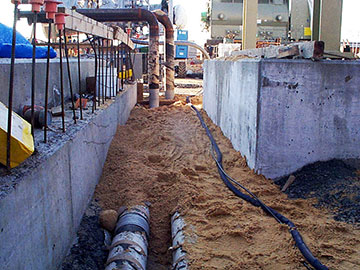
The linear anode solution consists of long runs of linear anode installed parallel and in very close proximity to the piping being protected. The current output is kept very low and is generally consistent across the entire system. A linear anode is in effect a distributed system with an infinite number of anodes spaced continually. This system provides the best technical corrosion prevention solution and minimizes the current output required as follows:

  • Does not require electrical isolation.
    Because the linear anode is closely located next to the piping being protected, electrical isolation is not a significant concern. The anode is “closely coupled” to the piping and operates with a very low anode gradient that minimizes any losses to nearby structures including grounding.
  • Assures good current distribution as the anode runs parallel to the piping being protected.
    The linear anode CP system design eliminates any requirement for supplemental anodes to address areas where remote anodes may be shielded after the CP system is commissioned. Wherever the piping goes, the linear anode follows in the same trench. This also makes it very easy to adapt the design during piping revisions that may change the piping system routing as the plant construction proceeds.
  • Eliminates risks of stray current.
    Close proximity to the piping being protected significantly limits current losses to other structures and virtually eliminates shielding and stray current concerns. This also significantly reduces the total current requirements for the system, reducing the rectifier requirements.
  • Access issues – the linear anode is installed in very close proximity to the piping that is to be protected.
    This minimizes the risk of third party damage and reduces trenching required for buried cable. If installed in conjunction with the piping, the anode can be placed in the same trench as the piping affording the anode protection by the piping itself from external damage. This is a very cost effective cathodic protection installation when installed concurrently with the piping.
  • Ease of installation – when installed alongside the piping as the piping is being installed, the installation is simply a matter of laying the anode cable in the trench.

Our experts are happy to answer your questions about corrosion prevention for underground piping.

Contact a Corrosion Expert

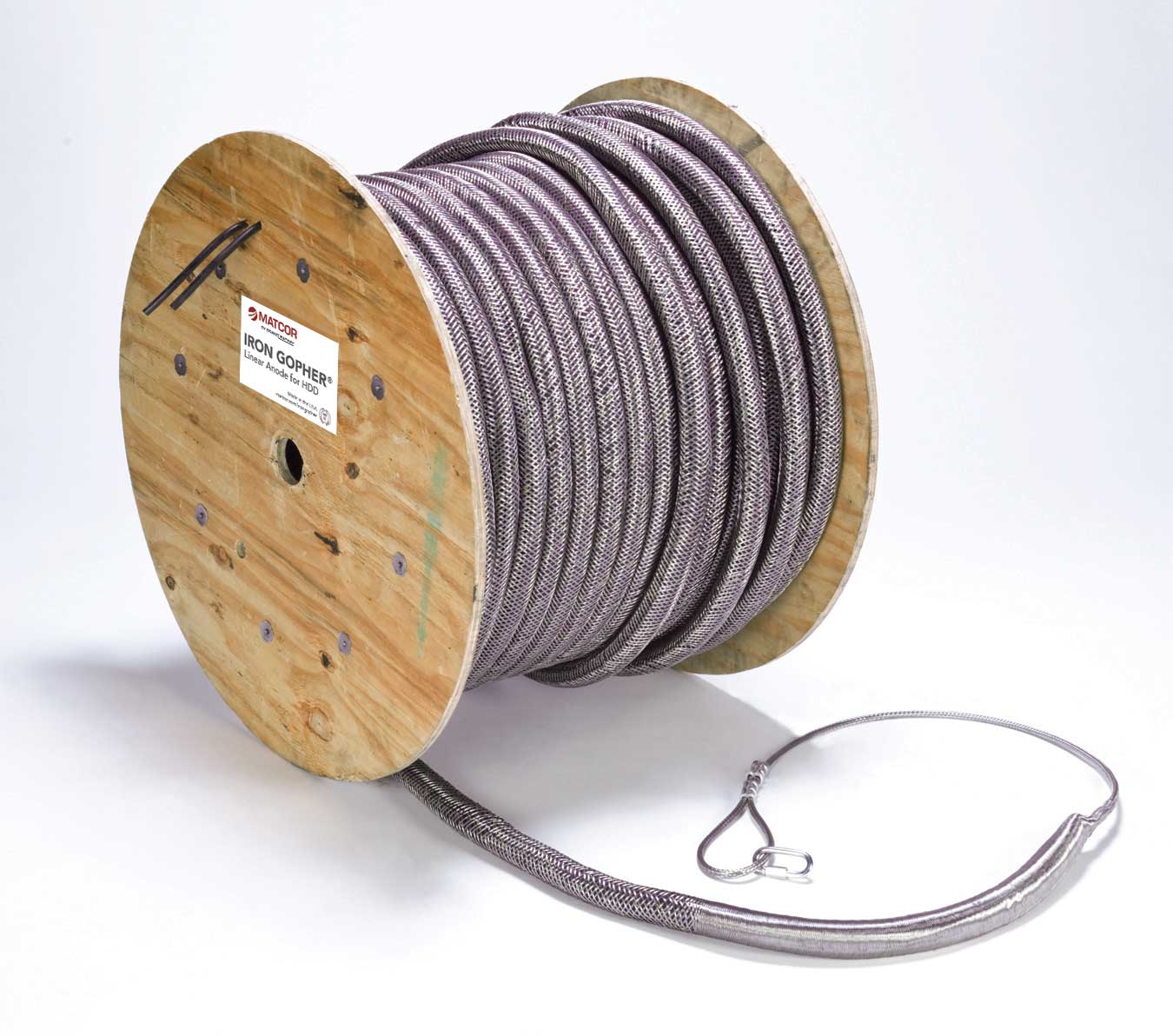
MATCOR Relaunches Iron Gopher® with Price Reduction and In-House Production

Chalfont, PA – MATCOR, Inc., a BrandSafway company and a leader in cathodic protection and AC mitigation solutions, announces the relaunch of its patented Iron Gopher® Linear Anode, now available at a significantly reduced price, providing cost-effective insurance to users for challenging horizontal directional drilling (HDD) projects, minimizing risks and reducing costs during installation.

This price reduction is the result of MATCOR’s move to in-house production, reducing reliance on third-party suppliers and shipping delays while ensuring superior quality control. The result is a stronger, more reliable linear anode that minimizes the risk of breakage during installation, helping you avoid idle crews and project delays.

“When we introduced the Iron Gopher, its cost limited adoption despite its superior performance,” said Ted Huck, Director of Sales at MATCOR. “By bringing production in-house, we’ve cut costs dramatically, allowing us to offer this premium solution at just a small premium over standard linear anode products.”

The Iron Gopher has already proven its value in major pipeline projects. A recent customer shared: “The Iron Gopher’s design and strength are unmatched for HDD applications. Installation was seamless, and the product is performing exactly as expected. We look forward to using it on future projects.”

For more information about the Iron Gopher or MATCOR’s cathodic protection and AC mitigation solutions, visit matcor.com.


To get in touch with our team of cathodic protection and AC mitigation experts for more information, to ask a question or get a quote, please click below. We will respond by phone or email within 24 hours. For immediate assistance, please call +1-215-348-2974.

Contact a Corrosion Expert

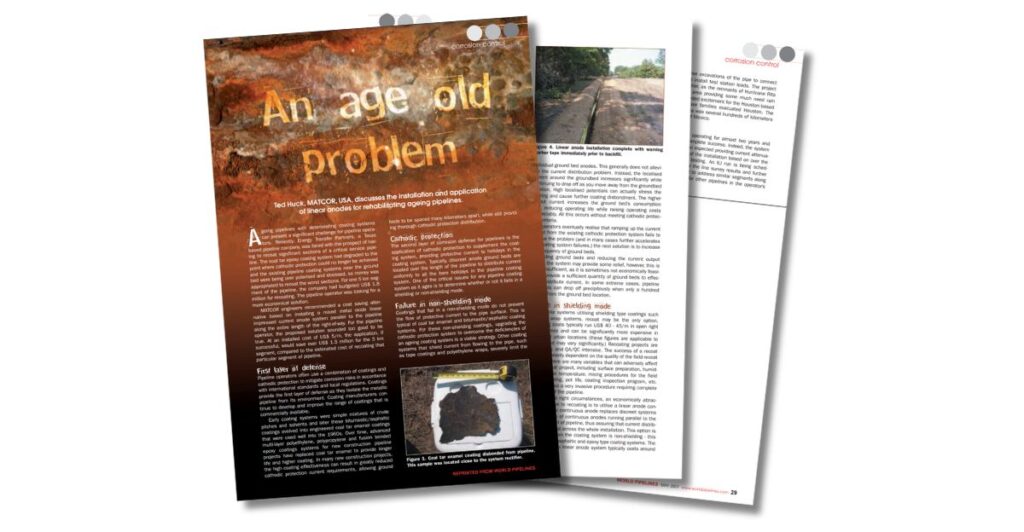
An Age-Old Problem: Addressing Aging Pipeline Coating Threats

In his article for World Pipelines, Ted Huck of MATCOR tackled a pressing issue for pipeline operators: the challenge of managing aging pipeline coatings and maintaining effective cathodic protection (CP). The solutions outlined in this article—particularly the use of linear anodes—remain as relevant and impactful as ever.

Huck explores cost-effective alternatives to recoating pipelines, focusing on improving CP distribution and reducing costs. These systems, which distribute CP current evenly along the pipeline, address key issues associated with deteriorating coatings, including:

  • Poor current distribution and high localized potentials.
  • Increased operating costs and reduced efficiency of traditional CP systems.
  • The high expense and disruption caused by recoating.

Case Study: Saving $1.5 Million with Linear Anodes

Huck highlights a 5-kilometer pipeline segment where installing linear anodes saved over $1.5 million compared to recoating. The system not only extended the pipeline’s service life but also demonstrated superior performance, making it a valuable tool for operators worldwide.

Huck’s insights continue to guide pipeline operators in rehabilitating aging infrastructure efficiently and economically.

Read the full article.

To learn more about solutions for aging pipeline coatings, explore our pipeline integrity management and corrosion engineering services.


To get in touch with our team of cathodic protection and AC mitigation experts for more information, to ask a question or get a quote, please click below. We will respond by phone or email within 24 hours. For immediate assistance, please call +1-215-348-2974.

Contact a Corrosion Expert

Linear Anodes for Pipeline Rehabilitation: Decades of Innovation

MATCOR’s Ted Huck presented at the Middle East Corrosion Conference on innovative strategies for pipeline rehabilitation, detailing advancements in cathodic protection technology over the decades.

Innovative cathodic protection systems address challenges like aging coatings and poor current distribution. Huck’s presentation explores:

  • The history and advancements of linear anode technology.
  • Key design considerations for cathodic protection systems.
  • Installation methodologies, including trenching, cable plowing, and horizontal directional drilling.
  • Case studies demonstrating successful pipeline rehabilitation.

To discover how linear anodes provide localized cathodic protection, enhance current distribution, and extend the lifespan of pipelines without the need for costly recoating, read the full paper or view the presentation.

Interested in learning more about pipeline rehabilitation? Explore our pipeline integrity management and corrosion engineering services.


To get in touch with our team of cathodic protection and AC mitigation experts for more information, to ask a question or get a quote, please click below. We will respond by phone or email within 24 hours. For immediate assistance, please call +1-215-348-2974.

Contact a Corrosion Expert

Protecting Aging Pipelines: Strategies for Coating Deterioration

As pipeline coatings age, their ability to prevent external corrosion diminishes. MATCOR highlights cost-effective strategies to rehabilitate pipelines with aging coatings in a Materials Performance article.

From advanced cathodic protection systems (CP) to high-performance recoating solutions, the article explores practical solutions to extend pipeline service life while addressing challenges like soil stress and coating disbondment.

To learn more about solutions for aging pipeline coatings and effective cathodic protection, read the full Materials Performance article or explore our corrosion engineering services.


To get in touch with our team of cathodic protection and AC mitigation experts for more information, to ask a question or get a quote, please click below. We will respond by phone or email within 24 hours. For immediate assistance, please call +1-215-348-2974.

Contact a Corrosion Expert

Pipeline Corrosion and Prevention—A Comprehensive Guide

Pipelines are a crucial part of the US infrastructure, but they face a serious challenge: corrosion. This guide explains pipeline corrosion, the different types, and how to prevent it to avoid costly and dangerous failures.

The Problem of Pipeline Corrosion in the United States

pipeline corrosion prevention

The United States has over 2,225,000 kilometers of pipelines transporting oil and natural gas. No other country comes close—Russia, in second place, has approximately 260,000 km. These pipelines are owned and operated by hundreds of companies and regulated by the US Department of Transportation’s Pipeline and Hazardous Materials Safety Administration (PHMSA).

Experts consider pipelines very safe—roughly 70 times safer than trucks1 and 4.5 times safer than rail2. However, many pipelines are at least 50 years old. This increases the risk of corrosion, which threatens their safety and reliability.

Why Pipeline Corrosion Prevention is Critical

Corrosion is a natural process where metal electrochemically reacts with the environment and deteriorates over time. Without regular maintenance and monitoring, this can lead to leaks or even pipeline ruptures.

The good news? Corrosion is completely manageable. By using the right technologies and maintenance practices, pipeline operators can manage corrosion and prevent failures.

Two Types of Pipeline Corrosion

Two primary types of pipeline corrosion exist.

  1. External Corrosion: Happens on the outside of the pipeline and causes approximately 8% of incidents.
  2. Internal Corrosion: Occurs inside the pipeline and accounts for approximately 12% of all incidents.

How to Prevent Pipeline Corrosion

Several strategies exist to prevent corrosion, depending on whether it occurs internally or externally.

Preventing External Corrosion of Pipelines

The two most effective methods to prevent external corrosion are:

  1. Pipeline coatings: These create a protective barrier between the pipeline and its environment. However, installation can damage them, and they can wear out over time.
  2. Cathodic protection systems: This method uses electrical currents to prevent the metal from corroding and requires frequent testing.

These methods work well, but require regular monitoring and maintenance to remain effective.

Preventing Internal Corrosion of Pipelines

Internal corrosion occurs when contaminants in the oil or gas being transported react with the pipeline. Common contaminants include oxygen, hydrogen sulfide, carbon dioxide, chlorides, and water. The severity of this corrosion is influenced by several factors, including:

  • The concentration of contaminants
  • The combination of different contaminants within the pipeline
  • Operating pressure and flow velocity
  • Pipeline design and holdup points
  • Operating temperature

To effectively manage internal corrosion, operators must use a combination of assessment and prevention strategies, including:

  1. Reducing contaminants before they enter the pipeline.
  2. Applying internal pipeline coatings to create a protective barrier.
  3. Injecting inhibitors to minimize corrosion reactions.
  4. Frequent internal cleaning to remove residues.

The Role of Internal Corrosion Direct Assessment (ICDA)

Assessment is the foundation of effective corrosion management. Internal Corrosion Direct Assessment (ICDA) identifies high-risk areas and helps operators prioritize maintenance. ICDA is particularly valuable for:

  • Evaluating risks based on contaminants, flow conditions, and pipeline design
  • Identifying areas prone to localized corrosion
  • Informing maintenance and repair strategies

Learn more about MATCOR’s Internal Corrosion Direct Assessment (ICDA) services.

The Role of Vapor Corrosion Inhibitors (VCIs)

VCIs are an advanced solution for preventing internal corrosion. They diffuse and bond with internal surfaces to create a protective barrier against water and oxygen.

VCIs are especially effective when used alongside other strategies, such as cathodic protection.

To explore the technology and benefits of VCIs across industries, visit our Vapor Corrosion Inhibitors guide.

For pipeline-specific applications of VCIs, see Pipeline Internal Corrosion Prevention with VCIs.

Keep Your Pipelines Safe from Corrosion

While pipeline corrosion is a serious issue, it can be effectively managed through proper monitoring and preventative measures. Whether facing internal or external corrosion, a strong integrity management program is essential to lowering the risk of failure.

Ensure your pipelines are fully protected from corrosion and explore our expert cathodic protection solutions and other comprehensive services.

Looking for a more in-depth explanation of cathodic protection? Learn more about cathodic protection systems.

1 propublica.org – Pipelines Explained: How Safe are Americas 2.5 Million Miles of Pipelines?

2 fraserinstitute.org – Pipelines are the Safest Way to Transport Oil and Gas


To get in touch with our team of cathodic protection and AC mitigation experts for more information, to ask a question or get a quote, please click below. We will respond by phone or email within 24 hours. For immediate assistance, please call +1-215-348-2974.

Contact a Corrosion Expert

Cathodic Protection Systems | Cathodic Protection Design | alternatives to sacrificial anodes and galvanic anodes