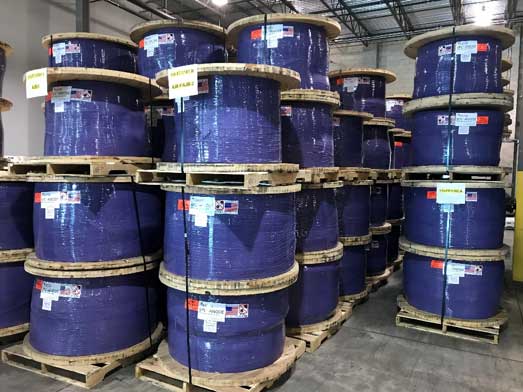
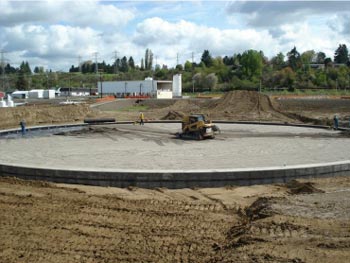
At MATCOR, we pride ourselves on being a world class manufacturer of unique cathodic protection systems and AC mitigation systems. Our anode systems offer you longer life, lower total installed cost, and are safer and easier to install than many conventional anode solutions. We have earned a reputation for exceptional manufacturing quality—but all companies say their products are world class and have exceptional quality, right? What makes MATCOR different? What does it mean to be exceptional?
At our state of the art Chalfont, Pennsylvania manufacturing facility we have developed a culture of quality. That is not to imply that we are perfect or that we don’t occasionally make a mistake; we are not perfect. However, we HAVE embraced, through our ISO Certified Quality Management System, a systematic approach towards excellence. So, while everyone aspires to do a quality job, our manufacturing team’s quality culture is based on perspiration—we work relentlessly to do a quality job for YOU by embracing the key tenets of quality.
Through our Manufacturing Quality Management System, we:
Document procedures for what we do
Train our team on the proper processes
Hold ourselves and our suppliers to high quality standards
Self-audit to ensure we are doing what we say we will do
Measure our performance daily through KPIs (key performance indicators)
Strive to continuously improve
Collect and act on YOUR feedback, comments and complaints
We’d love to hear from you about our manufacturing quality, please comment or contact us at the link below.
To get in touch with our team of cathodic protection experts for more information, to ask a question or get a quote, please click below. We will respond by phone or email within 24 hours. For immediate assistance, please call +1-215-348-2974.
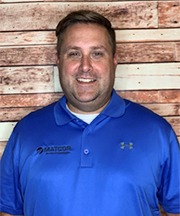
Meet Dan Vallot, our newest Account Manager. Dan is based at our Gonzales, Louisiana, office and covers the Gulf Coast states of Louisiana, Mississippi, Alabama, Florida and Georgia. Dan comes to us from Versa Integrity Group where he sold NDT services. Prior to that, he sold specialty mechanical services for Carber. Dan has 3 children, the oldest is attending LSU. In his free time he enjoys being with his family, cooking and gardening. He is also the Director for Industry of Faith Louisiana, a faith-based organization that provides support for oil and gas workers in the state of Louisiana. Please let Dan know how he can assist you to solve your corrosion problems.
Email: dvallot@matcor.com
Mobile: 225-828-7987
9222 Ashland Road
Gonzales, LA 70737
With the addition of Dan, and our new offices in Casper, WY and Midland, TX, we now have a full house of account managers ready to serve you nationally. SEE THE MATCOR SALES TERRITORY MAP
We are very pleased to introduce our three new account managers for the Gulf, Mid-Continent and Rockies regions. They are looking forward to working with you to help solve your corrosion problems.
Please be sure to connect with them at your earliest convenience. Dave, Ryan and Trey will all be in attendance at the 2019 NACE Central Area Conference in San Antonio, so if you haven’t made contact with them before then, please stop by to say hello!
Dave Arnold – Account Manager, Rockies Region
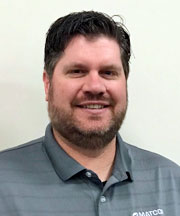
Dave comes to us from NCSG Crane and Heavy Haul, where he sold crane services primarily to oil and gas companies and industrial facilities for maintenance and new construction. He is also a United States Operation Iraqi Freedom Veteran of 7-1/2 years and has a Bachelors Degree in kinesiology and physical therapy. Dave will be based at our new Casper, WY office and will cover the states of Arizona, Colorado, Idaho, Montana, North Dakota, Northern New Mexico, South Dakota, Utah and Wyoming.
Based out of our Wadsworth Street facility in Houston, Ryan will cover the greater Houston area of the Gulf region. Before joining MATCOR, Ryan worked in Business Development for OES Oilfield Services, selling to offshore drilling companies.
Email: rspillane@matcor.com
Mobile: 682-666-2128
1423 Wadsworth Street
Houston, TX 77015
Trey Smith – Account Manager, Mid-Continent Region
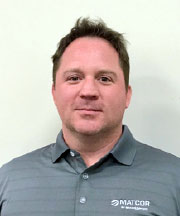
Trey joins us to cover the Mid-Continent region including the states of Missouri, Kansas, Nebraska, Oklahoma, Arkansas and the Texas Panhandle and will be based out of our Guthrie office. Trey is a United States Army Operation Enduring Freedom Veteran of 6 years. He has a BS in Business Management, minoring in Finance, and an MBA. He has 10 years’ experience in the midstream industry with T.D. Williamson and Nalco Champion.
Email: psmith3@matcor.com
Mobile: 405-657-4583
1700 E. Seward Road
Guthrie, OK 73044
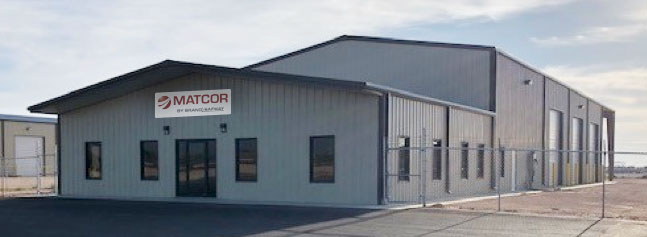
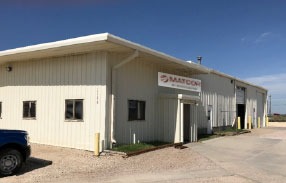
The grand opening celebration of our new Midland, TX field office was held on Friday October 18, 2019. A turnout of great clients toured the new facility, checked out our brand new state-of-the-art fleet of equipment, ate some delicious barbecue and won door prizes and MATCOR swag. If you didn’t get the chance to attend, the doors to our Midland office (and all our offices-Chalfont, Guthrie, Houston, and Casper) are always open. We are primed and ready to support clients in the Permian and all regions for years to come.
We are excited to announce that we have just opened two new offices to service the growing demands of the Permian and Rockies regions!
MATCOR Midland, Texas
MATCOR’s New Midland Texas Office
6917 South County Road 1276
Midland, TX 79706
Main Office Phone: 832-755-2714
This article provides a brief overview of the important role of cathodic protection remote monitoring systems in today’s pipeline operations. We will cover the CP equipment and features that can be monitored and how data is transmitted.
Advanced cathodic protection remote monitoring systems are critical for today’s pipeline operator.
Modern pipeline operations face increasing pressures to incorporate advanced technologies to:
Drive down operating costs
Improve system reliability
Comply with regulatory requirements
Monitor the health of their pipeline networks
Monitor the critical systems that are integral to pipeline integrity
The use of advanced cathodic protection (CP) remote monitoring systems has become a critical component in the pipeline operator’s toolbox to meet these challenges.
CP remote monitoring (and control) has proven to be a reliable and cost-effective means to oversee the proper functioning of cathodic protection systems and AC Mitigation systems that are critical to assuring pipeline integrity and the proper protection against pipeline corrosion. Where operators in the past would have to send technicians out to remote pipeline locations to collect snapshot data on a frequent basis, the smart deployment of CP remote monitoring systems can provide continuous real time data that can be accessed from any cloud connected handheld or desktop device. Additionally, a remote monitoring unit for cathodic protection is well-insulated; this construction affords them excellent protection against lightning strikes. The financial, environmental and safety impact of eliminating hundreds of thousands of windshield hours is staggering across the vast pipeline industry.
Cathodic Protection Remote Monitoring – What can you monitor?
Cathodic Protection Rectifiers – the installation of RMUs with built in interruption capabilities should be standard on all new pipeline installations and retrofitting older units can provide significant cost savings and improve CP system reliability.
DC Cathodic Protection Test Stations – with today’s continuing advances in remote monitoring technology and costs, it is quickly becoming very cost effective to install remote monitoring units on all test stations. When combined with the ability to easily interrupt all of the influencing current sources on a pipeline, regularly scheduled testing of the CP system can be performed quickly and at virtually no cost.
AC and DC Coupon Test Stations – the latest NACE guidelines for AC Mitigation (SP21424-2018*) emphasize that the localized DC current density has a significant impact on AC corrosion and gathering data on both AC and DC current densities at areas of interest/risk is critical to a successful AC Mitigation strategy. Effectively doing so requires the ability to monitor these values over time as AC loads vary during the day and seasonally.
Critical Bonds – monitoring the effectiveness of critical bonds is necessary (and in many cases required by local regulatory bodies) to assure pipeline integrity.
NACE SP21424-2018 “Alternating Current Corrosion on Cathodically Protected Pipelines: Risk Assessment, Mitigation, and Monitoring”
How does a CP remote monitoring system transmit data?
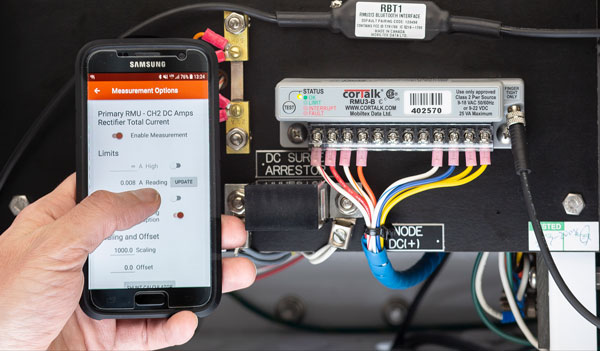
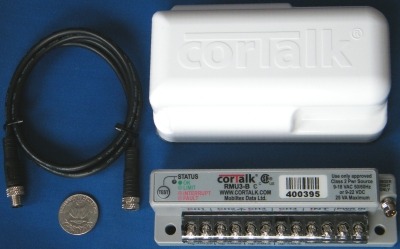
Mobiltex Cathodic Protection Remote Monitoring Unit (CP RMU)
Today’s operators have a range of options to assure that remote monitoring systems can regularly communicate data to their host data collection systems. The availability of conventional cellular networks combined with various commercial satellite systems assures pipeline operators of the ability to communicate with devices in even the remotest of locations. Your monitoring system provider can work with you to select the appropriate communications technology for each CP remote monitoring unit (CP RMU) location.
In addition to choosing how the communication is to occur, another key factor to consider is whether the communications are to be one way (monitoring only) or two-way (monitoring and control). For test station applications where data collection is the goal, one way transmission of the monitoring unit’s data is all that is required. For rectifier units, the ability to control the system output and/or the ability to initiate an interruption cycle for close interval surveys or test station polling purposes necessitates the ability of the cathodic protection remote monitoring unit to receive and act on communications as well as to transmit data.
Software Interfaces – Installing the appropriate CP RMU hardware is just one step in implementing a successful remote monitoring (and control) program. The data must be collected, stored, and accessible for the operator. Sophisticated cloud-based interfaces have been developed that incorporate critical features including firewall-friendly, password protected internet browser access. These systems allow for multiple client user accounts with configurable permission levels and automated alarm and status information including email and text alerts for designated alarm conditions.
In summary, the use of remote monitoring technology is a key component to the successful operation of any modern pipeline integrity management program. While MATCOR has extensive experience with all of the major RMU manufacturers, we have recently teamed up with Mobiltex, a leader in the field of remote monitoring, to bring state of the art technology to the pipeline and cathodic protection industry. Mobiltex’s CorTalk® line of CP RMU units combined with their CorView interface offers all the features necessary to implement a comprehensive, cost-effective, and highly robust cathodic protection remote monitoring program.
Please contact us at the link below if you have questions about cathodic protection remote monitoring, or if you need a quote for services or materials.
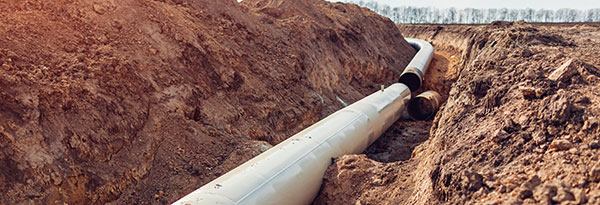
Pipeline cathodic protection design for new pipelines may appear to be a rather easy task for anyone with a basic understanding of cathodic protection. However, as with all design efforts there are a wide number of factors that need to be considered for a sound design that meets generally accepted industry practices.
This article highlights 12 things that the pipeline cathodic protection system designer needs to consider when developing a CP system design. This is not intended to be a comprehensive list as every project has its own unique challenges, but these 12 items would all typically have to be addressed during the design phase. It is assumed that the basic pipeline information is already available to the CP designer including pipeline length, pipeline routing and pipeline characteristics (material, wall thickness, coating type, operating temperature, etc.). Armed with this basic information the CP designer should also consider the following in their design efforts.
12 Things to Consider for New Pipeline Cathodic Protection Design
Soil Resistivity is a factor in many of the design calculations and assumptions (e.g. current requirement, anode resistance, attenuation, AC interference, etc…) Actual soil resistivity data should be collected along the proposed route. Learn about soil resistivity testing.
Design current requirement is selected based on the soil type(s) using some accepted industry guidelines taking into consideration the coating manufacturer’s recommended coating efficiency or other industry accepted guidelines. Additional current requirements for mitigating interference currents should be considered based on the designer’s experience.
Distribution of CP System Stations should take into consideration the total current required, the pipeline attenuation characteristics, the availability of power for impressed current cathodic protection systems, varying soil regimes, isolation valves and other factors to determine how many, what size and where each CP System will be located.
Foreign pipelines and other DC interference sources should be evaluated as part of the CP system design efforts and generally warrant immediate mitigation measures or testing and monitoring provisions for observation and assessment.
AC Interference assessment should be performed to determine if there are one or more high risk categories for AC Interference. Should the initial assessment confirm that there is potential for AC Interference an experienced AC Interference and Mitigation specialist would typically use sophisticated AC modeling to assess the risk and propose appropriate mitigation. From a CP perspective, there is a relationship between DC current density and AC induced corrosion risks where too much cathodic protection accelerates the AC induced corrosion rate so care must be exercised by the CP designer to avoid high DC current densities in AC risk areas.
CP Station design includes the type of anode configuration, anode selection, installation methodology, etc… The CP designer will typically provide detailed Bill of Materials as well as CP System issued for construction drawings and construction details showing the location of equipment and providing installation instructions.
Isolation of MLVs and Stations is a key design criterion that impacts the pipeline cathodic protection system design. Some owners are strongly in favor of isolation of MLVs and Stations from their main pipeline while other owners prefer not to isolate and have to maintain isolation and instead require the that CP system be sized to account for losses to current drains.
Power supply type, sizing and selection is another of the decisions that is determined by the CP designer with consideration given to the pipeline owners specifications and preferences. For most pipeline applications, impressed current systems are typical and these require a DC power source. Electrical AC to DC power supplies (“rectifiers”) are the most common power supply but for remote areas with limited AC power availability, alternate power supplies such as solar, wind, fuel cells, thermo-electric generators or other sources may be required.
Terminal piping is often associated with a new pipeline construction project and the pipeline CP system designer must often provide a supplemental design specifically for the terminal or station piping, or account for these in the primary pipeline CP system design
Use of temporary CP systems is often recommended when permanent power may not be available for some time. These typically involve the installation of galvanic anodes strategically along the pipeline.
Provisions for testing and monitoring are critical components to any successful pipeline CP system design. This often includes the use of remote monitoring systems for all of the system power supplies, specialized test coupons for AC and DC Interference, and numerous cathodic protection test stations placed at the appropriate strategic locations to be able to properly test and monitor the CP system performance.
As noted earlier, this is far from a comprehensive list of all of the factors for a specific pipeline CP System design. Every project may have its own unique challenges; however, the 12 items listed above represent a great starting point for any new pipeline cathodic protection system design challenge.
Please contact us at the link below if you have questions about pipeline corrosion, pipeline cathodic protection design, or if you need a quote for services or materials.
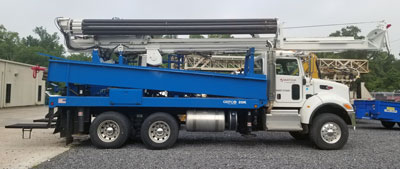
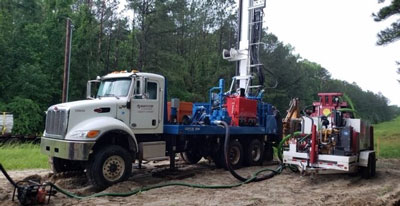
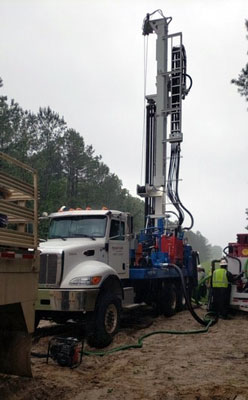
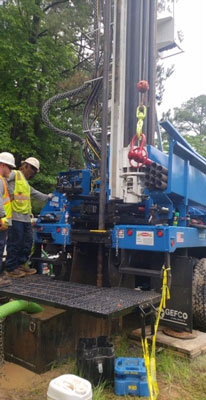
We are excited to announce the addition of 3 state of the art drilling trucks to our equipment fleet to support customers in the mid-continent and Gulf regions!
These brand new drill trucks feature:
Faster head travel speeds in drill mode
Up 166 FPM
Down 112 FPM
30K UP is 125 FPM
Dual motor with 3 speed options and upgraded rotary RPM for different drilling conditions
Low range 110 rpm
Mid range 148 rpm
High range 230 rpm
Upgraded rotary torque for better control drilling in rock
Low range 7350 ft-lbs
Mid range 5450 ft-lbs
High range 3400 ft-lbs
Upgraded Electric Control Panel enables better/finer control in all drilling conditions
Satellite maintenance and drilling tracking ability from anywhere in the US.
Larger DP600 screen
More data
Fuel burn read out
Closed in platforms for improved safety
Have questions or need a quote for services? Contact us at the link below.
The richest man in Africa, Aliko Dangote, undertakes $12B project including 153 ASTs
Chalfont, PA (April 2019) – MATCOR, Inc., the trusted full-service provider of proprietary cathodic protection products, systems, services and corrosion engineering solutions announced that it recently completed shipment of over 500,000 linear feet (150+ km) of its SPL™-FBR linear anode product along with other ancillary materials for 153 above ground storage tanks (ASTs) in Africa.
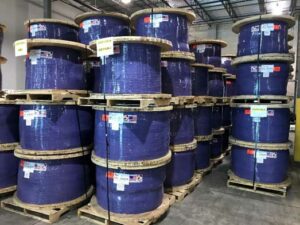
Tank anode system materials prepped for export at MATCOR’s Chalfont PA facility. Over 520 reels of anode material have been shipped to Nigeria.
The anodes, which will prevent tank bottom corrosion, are part of an ambitious refinery project undertaken by Aliko Dangote, Africa’s richest man. The tanks are being erected on over 6,000 acres of swampland outside of Lagos, Nigeria.
MATCOR was selected for this project due to quick delivery and the company’s unique linear anode design, which does not require field splicing and saves significantly on installation time and costs.
“The ability to manufacture the large quantity of custom length linear anode segments in a very compressed time frame was key to meeting the tank contractor’s needs,” noted Ted Huck, Director of Manufacturing and Quality Assurance for MATCOR. “Our team handled a very complex order with a very tight delivery schedule while maintaining world class quality.”
Learn more about the project in our recent blog post.
This month MATCOR will ship the final tank anode system assemblies for Africa’s most audacious industrial project. The project is being undertaken by Aliko Dangote, Africa’s richest person, and when completed this $12 billion Dangote oil refinery could, according to a 2018 New York Times article, “transform Nigeria’s corrupt and underperforming petroleum industry. Planned as the world’s largest refinery…should process 650,000 barrels of crude oil daily.” With Nigeria poised to become the world’s third most populous nation by 2050 (surpassing the USA) and having Africa’s largest economy, this project is being touted as a milestone achievement in what many are dubbing the African Century.
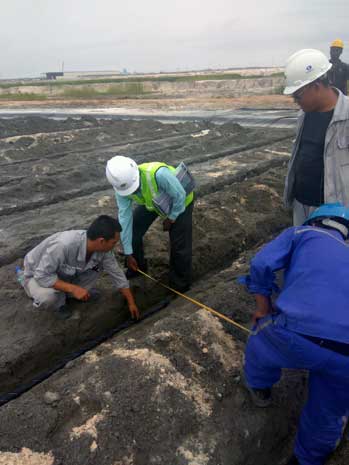
MATCOR Field Engineer E.Gopal (yellow vest) at Lagos site inspecting tank anode system installation
As part of this ambitious refinery project, a total of 153 above ground storage tanks for crude oil, refined and intermediary products up to 92m in diameter (300 ft) are being erected on the 6,180 acres of swampland just outside of Lagos, Nigeria. MATCOR’s innovative tank anode system technology using linear anodes was selected by the project’s EPC contractor, Engineer’s India Limited, as the design basis for the cathodic protection for the project’s above ground storage tanks. Working closely with both the owner’s Indian based engineering team and the EPC contractor, MATCOR was successful in identifying the key tank contractors that would be bidding the tank erection and supplying the cathodic protection systems as part of their specifications.
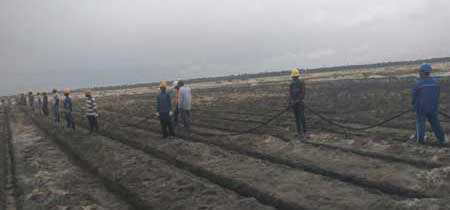
Linear Anode being installed on large crude oil storage tank foundation
Ultimately, MATCOR was successful in securing contracts to provide the linear anodes for each of the three tank packages, one from a Chinese contractor and two from a UAE based contractor.
Tank anode system materials prepped for export at MATCOR’s Chalfont PA facility. Over 520 reels of anode material have been shipped to Nigeria.
In total, MATCOR has supplied over 500,000 linear feet (150+ km) of our SPL™-FBR linear anode product along with other ancillary materials for the under tank cathodic protection systems over an 18-month period. With all the anodes having been manufactured in MATCOR’s ISO 9001 certified Chalfont PA facility, MATCOR continues to be the global leader in the manufacturing of impressed current linear anodes for above ground storage tank cathodic protection.
Have questions about tank corrosion protection, or need a quote for services or our tank anode system? Contact us at the link below.
Specifying the ideal sand bedding supports tank corrosion protection and a long tank bottom service life.
For new construction tank projects and for retrofits of existing tanks, it is common practice to install clean washed sand as the pad upon which the tank bottom is fabricated. The use of oil sand, crushed stone, asphalt, or other materials directly under the tank bottom should be avoided, as these hinder effective tank corrosion protection. This article provides guidelines to the specifications for the sand bedding materials. These guidelines are based on providing a low corrosivity environment compatible with cathodic protection to assure a long service life of the tank bottom.
Economic Considerations
For a typical 150-foot diameter tank using 12 inches of sand bedding the quantity of sand that is required is approximately 17,679 cubic feet of sand which is roughly 883 tons. The cost of the sand, including delivery, is a significant cost and far exceeds the cost of cathodic protection– especially if the sand specifications are quite stringent and require sourcing sand that requires significant transportation. Some consideration can be given to relaxing the sand recommendations, even if that warrants increasing the cathodic protection requirements, should there be a significant cost impact to complying with the sand specifications – consult your cathodic protection designer.
Recommended Sand Properties
The table below summarizes the recommended sand properties to support aboveground storage tank corrosion protection.
Property
Recommended Value
Resistivity (ohm-cm)
20,000 – 100,000
pH
> 6.5
Chlorides (ppm)
< 10
Sulfates (ppm)
< 200
Sulfides (ppm)
< 0.1
Particle Size
100% pass through #4 Sieve
Soil Resistivity
The best proxy for determining corrosivity of sand materials is the electrical resistivity of the sand. Clean washed sand typically has resistivity values more than 20,000 ohm-cm and in some cases can exceed 100,000 ohm-cm. The higher the resistivity of the sand, the lower the corrosivity of the sand; however, when designing cathodic protection, the higher the sand resistivity the greater the impact on the overall system resistance and the electrical power required for the cathodic protection system. API Recommended Practice 651 Cathodic Protection of Aboveground Petroleum Storage Tanks provides the following table classifying resistivity of soil/sand.
Measuring pH indicates the hydrogen ion content of a soil. Corrosion of steel is fairly independent of pH when it is in the range of 5.0 to 8.0. The rate of corrosion increases appreciably when pH is < 5.0 and decreases when pH is> 8.0. pH may be determined in accordance with ASTM G 51 or equivalent
Chlorides
Chlorides will affect the resistivity of soil, and act as a depolarizing agent which will increase the current requirement for cathodic protection of steel. Pitting corrosion on steel can begin at chloride levels of 10 ppm. Chloride content may be determined in accordance with ASTM D 512 or equivalent.
Sulfates
Sulfate levels >200 ppm frequently indicate high concentrations of organic matter. Sulfate content may be determined in accordance with ASTM D 516 or equivalent.
Sulfides
Sulfide levels > 0.10 ppm may indicate that sulfates have been reduced by bacteria. Sulfide content may be determined in accordance with EPA 0376.1 or equivalent.
Particle Size
The sand bedding material should be clean of rocks, clumps and other debris and for clean sand capable of passing through a #4 sieve, for washed river sand an alternative acceptable particle size is 100% pass through a 3/8” sieve.
Sand Depth of Cover
For new construction tanks, the typical design is to provide a minimum of 12 inches (30 cm) of sand cover; however, for tank bottom retrofits it is quite common to provide 6 inches of sand (15 cm) for double bottom installations or for applications where the existing bottom is removed, and the top layer of the underlying soil foundation is being removed.
Have questions about tank corrosion protection, or need a quote for services or cathodic protection design and materials? Contact us at the link below.

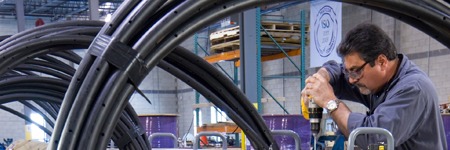 At MATCOR, we pride ourselves on being a world class manufacturer of unique cathodic protection systems and AC mitigation systems. Our anode systems offer you longer life, lower total installed cost, and are safer and easier to install than many conventional anode solutions. We have earned a reputation for exceptional manufacturing quality—but all companies say their products are world class and have exceptional quality, right? What makes MATCOR different? What does it mean to be exceptional?
 Meet Dan Vallot, our newest Account Manager. Dan is based at our Gonzales, Louisiana, office and covers the Gulf Coast states of Louisiana, Mississippi, Alabama, Florida and Georgia. Dan comes to us from Versa Integrity Group where he sold NDT services. Prior to that, he sold specialty mechanical services for Carber. Dan has 3 children, the oldest is attending LSU. In his free time he enjoys being with his family, cooking and gardening. He is also the Director for Industry of Faith Louisiana, a faith-based organization that provides support for oil and gas workers in the state of Louisiana. Please let Dan know how he can assist you to solve your corrosion problems.
 Dave comes to us from NCSG Crane and Heavy Haul, where he sold crane services primarily to oil and gas companies and industrial facilities for maintenance and new construction. He is also a United States Operation Iraqi Freedom Veteran of 7-1/2 years and has a Bachelors Degree in kinesiology and physical therapy. Dave will be based at our new Casper, WY office and will cover the states of Arizona, Colorado, Idaho, Montana, North Dakota, Northern New Mexico, South Dakota, Utah and Wyoming.
 Based out of our Wadsworth Street facility in Houston, Ryan will cover the greater Houston area of the Gulf region. Before joining MATCOR, Ryan worked in Business Development for OES Oilfield Services, selling to offshore drilling companies.
 Trey joins us to cover the Mid-Continent region including the states of Missouri, Kansas, Nebraska, Oklahoma, Arkansas and the Texas Panhandle and will be based out of our Guthrie office. Trey is a United States Army Operation Enduring Freedom Veteran of 6 years. He has a BS in Business Management, minoring in Finance, and an MBA. He has 10 years’ experience in the midstream industry with T.D. Williamson and Nalco Champion.