
All posts by MATCOR

Turnkey Project Includes Pipeline Recoating & CP Upgrade

Working with fellow BrandSafway company Industrial Specialists LLC, MATCOR successfully completed a turnkey pipeline recoating and cathodic protection upgrade project ahead of schedule and to the operator’s complete satisfaction.

pipeline recoating project
MATCOR & Industrial Specialists team up on a complex pipeline recoating project.

Earlier this year, MATCOR purchased two state of the art dual air/hydro vacuum excavators. We have put these units to work as we expand our capabilities to include pipeline recoating services.

“We recently completed a major project in Oklahoma for a midstream client that leveraged our ‘Big Air’ vacuum excavators. This complex project challenged our existing capabilities and allowed us to draw on the resources and capabilities of our parent company, BrandSafway, to provide a full service cathodic protection upgrade and pipeline recoating in multiple locations.”—Josh Johnston, MATCOR Director of Sales

Pipeline Recoating Added to Anode Bed and Test Station Installation

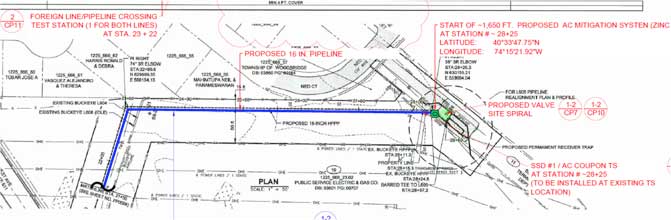
The project consisted of six (6) anode bed installations and seven (7) test station installations – standard CP work for MATCOR; however, at each of the test station locations, we were also tasked with coating removal and recoating of the approximately 20 ft of pipeline exposed at each location.

The coating removal was complicated by the presence of asbestos. Prior to 1980, asbestos was typically used in a felt wrapping around the pipe along with an asphaltic (tar) outer wrap.

Asbestos can still be found in the coating of hundreds of thousands of feet of buried pipeline installed prior to 1980. MATCOR’s crew received one week of asbestos removal training to be properly qualified to identify, remove and dispose of the coating containing asbestos.

MATCOR’s parent company, BrandSafway, has in its portfolio of businesses Industrial Specialists, LLC (IS), which is an extremely well-qualified industrial coatings services team with over 35 NACE trained and certified inspectors and over 1,700 painters and supervisors.

MATCOR was able to partner with the IS Tulsa, OK office to deliver the entire project using in-house BrandSafway resources, making us a one stop shop for this level of work. MATCOR’s CP construction crews performed the vacuum excavation and asbestos coating removal, and then the BrandSafway industrial services crew performed the blasting, inspection and recoating work. One big company with a wide range of industrial capabilities.

Project Completed Ahead of Schedule

The project was executed successfully, completed two weeks ahead of schedule and to the pipeline operator’s complete satisfaction. We even identified two areas where the pipeline was directly on top of rock and the owner asked that MATCOR install a layer of rock shield over the completed recoat areas. At the end of the project, the pipeline operator affirmed that they would be using MATCOR again for similar project work.


Have questions or need a quote for cathodic protection or pipeline recoating services? Contact us at the link below.

CONTACT A CORROSION EXPERT

Durammo Helps You Do More With Your Money.

MATCOR’s proprietary deep anode system is a cost-effective approach to installing deep anodes.

Recently a customer asked MATCOR to bid the installation of multiple deep anode systems, each consisting of 15 high silicon cast iron anodes to be installed in 350-ft. deep holes. MATCOR provided an alternate proposal based on our proprietary Durammo® system.

Durammo® Deep Anode System

2 Major Benefits of Durammo 

  1. It eliminates the need for a junction box
  2. It requires a lot less cable due to its being a continuous anode system with only two primary cables

Meaningful Cost Savings

When you are looking at 15 individual anodes with hundreds of feet of dual insulated HMWPE/Kynar® or Halar®  (pick your preferred fluorinated polymer – they are very similar in their chemical resistance and are both suitable for deep anode installations), the cabling costs are significant as is the cost of a suitably sized junction box. Multiply these savings over several sites and it can lead to a meaningful costs savings over the typical conventional anode installation.

9 Reasons DURAMMO® Beats Conventional Anode Systems »

Expand Your Scope of Work!

Our client took advantage of the cost savings for the Durammo and awarded MATCOR the installation work and used the cost savings to have MATCOR repair, replace and add additional test stations instead of paying for a lot of additional cable and junction boxes. The Durammo cost savings allowed the operator to expand the scope of work doing more with the monies budgeted on the project.

Talk to your MATCOR representative to see how the Durammo can allow you to get more done with your limited CP budget monies.


To get in touch with our team of experts for more information, to ask a question or get a quote, please click below. We will respond by phone or email within 24 hours. For immediate assistance, please call +1-215-348-2974.

Contact a Corrosion Expert

Trying to Complete 2020 CP Projects?

Can this year end any sooner?

Wait, I still have stuff that needs to be completed this year!

This is a sentiment that many of us feel. It’s been a crazy year the likes of which we have never seen before and hopefully we will not see again.

But before we turn the page on 2020, many of our clients have expressed to MATCOR that they still have projects that were supposed to be completed in 2020—budgeted projects that still need to be completed this year. Between the lockdowns and the uncertainty over oil prices, too many projects were delayed or slow to get started. Now that we are several weeks into the fourth quarter and the weather is starting to turn, the working daylight hours are winnowing, the holidays are approaching, and the demand for cathodic protection installations is quickly filling up the available capacity in the market place.  There are only so many hours left in this year.

MATCOR is here to help.

We are working as hard as we can to satisfy as many customers as possible with our remaining capacity, and we are also encouraging customers to consider getting an early start to their 2021 construction project schedule.

Typically, January and February are slow construction months. In part this is because of weather issues, but often it is a budget cycle issue – clients are still finalizing their budgets, project teams are just getting back from the holiday season, and bid packages are being developed to be issued in February or March for a lot of CP construction work.  We expect 2021 will be a very busy year as owners and operators catch up on work that was pushed out, could not be completed in 2020, and begin to comply with new PHMSA Mega Rule requirements.

Purchase Cathodic Protection Materials Now with Your 2020 Budget for Installation in 2021.

We encourage all customers to consider getting started early – MATCOR is available to work with you.  If you have 2020 budget money but are not able to get the work completed in 2020, consider purchasing the materials with your 2020 monies and completing the installations in early 2021.  MATCOR can work with you to procure and store the materials and to plan an early first quarter installation.

Contact your MATCOR representative at the link below to discuss options for work that has been delayed or that needs to be done quickly.  We will do our best to support you.


Contact a Corrosion Expert

What is The Best Anode For Low Temperature Seawater Applications?

A MATCOR customer recently inquired about mixed metal oxide (MMO) anodes for low temperature seawater environments amid a concern over the formation of chlorine hydrates.  

This article describes a special low temperature MMO anode formulation that addresses these concerns. MATCOR is currently working on two projects that will potentially benefit from this modified MMO anode.

What is the best anode for low temperature seawater applications?

What concerns are there over the use of MMO anodes in cold water environments?

As a general rule, MMO anodes perform exceptionally well in chlorinating environments such as seawater.  Almost all MATCOR anodes are manufactured using a standard MMO coating formulation that is designed to operate efficiently in a wide range of electrolytes and environments.

In low temperature seawater, however, there is the possibility that high localized concentrations of chlorine can be formed in conjunction with a significantly reduced pH environment. 

Chlorine hydrate is a chlorine molecule caged in 8 molecules of water.  The generation of chlorine hydrate is strongly related to localized mass transport limitations which are greater at lower temperatures. There is no direct impact of chlorine hydrates to the titanium anode substrate or the anode coating. However, the presence of significant amounts of chlorine hydrate may result in inhomogeneous current distribution due to the differences in the conductivity. This could impact both the effectiveness of the current distribution being applied to the cathodically protected structure, and, over the long term, the wear rate or life of the coating.

Localized factors have a significant effect on the conditions that result in chloride hydrate formation. In addition, the properties of the MMO coating can have an impact.

MATCOR’s standard MMO formulation is suitable for low temperature chlorinated environments.

A modified formulation provides the best anode for low temperature seawater applications

By modifying the formulation, we can lower the oxygen overpotential to promote greater oxygen generation and less chlorine. This modified formulation reduces the quantity of chlorine gas while favoring the generation of oxygen.

This “cold” MMO formulation in low temperatures can be expected to reduce chlorine and boost oxygen generation by as much as 15%.

The other factor that has a large influence is current density, as it is this current density that determines the quantities of both oxygen and chlorine gas that are evolved. Reducing current density reduces the quantity of chlorine gas being generated.

In summary, MATCOR’s standard MMO coating formulation is a broad-based formulation that works in a wide range of electrolytes.

For areas of significant concern due to a combination of low temperature electrolyte and high current density, a special low temperature formulation is available. This formula reduces chlorine generation in favor of oxygen, helping to reduce any concerns over low temperature and chlorine hydrate formation.


If you have questions, or would like information on MATCOR’s special MMO anodes for low temperature applications, please contact us at the link below.

Contact a Corrosion Expert

Horizontal Directional Drilling for a Middle East Tank Retrofit

In a recent Tanks & Terminals article, Ted Huck discusses a tank cathodic protection retrofit project in the Middle East utilizing horizontal directional drilling technology.

Existing tanks pose several challenges that must be considered when looking to install cathodic protection, since access directly below the tank is not readily available.

Originally constructed in 1995, the original design of this critical service ethylene storage tank included a cathodic protection system to protect the external tank bottom in contact with the ground. Over time, the system stopped providing enough current to meet NACE criteria for the control of corrosion. 

Discrete Anodes Along the Tank Perimeter Not Satisfactory

The first retrofit cathodic protection system consisted of installing discreet anodes around the perimeter of the tank. While relatively easy to install, this method of retrofit installation often struggles to drive current to the full tank bottom. The results were not satisfactory so another method was needed.

Linear Anodes Installed Using Horizontal Directional Drilling

MATCOR had proposed an alternate approach, successfully being performed in the US but not tried previously in the Middle East. It involves the installation of multiple strings of linear anodes directly below the tank using horizontal directional drilling (HDD) technology. By drilling under the tank, it is possible to install anodes spanning the entire length of the tank. This method also allows for a testing device to measure the effectiveness of the cathodic protection system.

Click below to read the full article regarding this tank retrofit cathodic protection system, installed successfully in December 2019.


If you have questions, or for information on MATCOR’s above ground storage tank cathodic protection solutions, please contact us at the link below.

Contact a Corrosion Expert

More New Equipment to Benefit You!

Vacuum excavation added to our wide range of cathodic protection construction services.

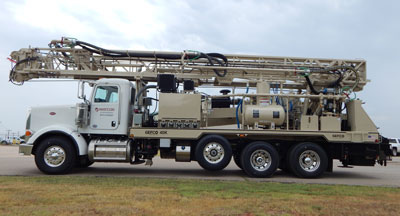
MATCOR continues to invest in new equipment to allow us to perform your projects in an efficient and safe manner with minimal downtime. MATCOR has seen an unprecedented investment in new equipment, having added multiple new drilling rigs to our fleet while rotating out our older models, purchased new water trucks, added MudPuppy mud cleaners and recyclers, and commissioned two new HDD rigs in the past three years.

But that is not all, MATCOR is very excited to roll out a new capability to our service line. We have purchased two state of the art Vacuum Excavators.

Vacuum excavation services now available.

These two new vacuum excavators are dual air and water units allowing MATCOR’s crew to operate efficiently in a wide range of environments. “Big Air” compressor capability provides 300 lbs. of cutting capability, enabling us to excavate in many areas without the need for water.

The excavated material is vacuumed up in a dry form with significantly less mess and environmental impact. This allows for the expeditious backfilling of the excavation with the same material that had been removed. It also eliminates the need to haul off any spoils or haul in fresh fill materials.

Our new excavators are dual capable units that also incorporate a hydro excavation capability. High pressure water is more aggressive and can cut through virtually any soil type including more compact, rocky and dense soil that may preclude the use of air. The hydro capability is also great for cleaning the pipeline once excavated to enable physical inspections and making test station or negative connections.

MATCOR is excited to be adding vacuum excavation to our in-house construction capabilities allowing us to provide a wide range of additional services to our customers.

If you have questions, or for information on MATCOR’s construction capabilities, please contact us at the link below.

Contact a Corrosion Expert

Better Tank Cathodic Protection

Looking for a better tank cathodic protection system?

Find our article in the April 2020 Storage Terminals Magazine. “No More Gridlock—Take the Ring Route” is a comparison of grid anode systems vs concentric ring systems for tank bottom cathodic protection.

Cathodic Protection of the external tank bottom for large diameter above ground storage tanks has been adopted as good engineering practice around the world.

Unfortunately, many existing grid anode systems have experienced premature failures, resulting in excessive tank bottom corrosion and costly replacement.

A recent MATCOR article published in Storage Terminals Magazine provides an overview of these grid CP systems and an alternative concentric ring linear anode system (link to the full article below). Here are just a few key points:

Grid Tank Anode Systems

  • Consist of field assembled MMO ribbon anodes and titanium conductor bars
  • Require flawless design and installation
  • Subject to poor welding and other concerns
  • Failures can be catastrophic

Concentric Ring Linear Anode System

  • Factory assembled—no field cutting or splicing required
  • Easy, fast and reliable installation
  • Coke backfilled sock protects the anode
  • Redundant—each ring segment has two feeds
  • Long life compared to the grid systems of the 1990s

If you have questions, or for information on MATCOR’s above ground storage tank cathodic protection solutions, please contact us at the link below.

Contact a Corrosion Expert

Enerfin Joins Growing List of Satisfied Durammo® Deep Anode System Users

Josh Johnston, MATCOR’s director of sales, wanted to share a recent conversion of a new customer to the growing list of satisfied Durammo Deep Anode System users.  As Josh explained, “the Durammo is a salesman’s dream product. It offers our customers an innovative product that has an amazing track record. Its design makes it safer and easier to install because it comes preassembled ready to immediately lower down the hole.”

Durammo Deep Anode System Installation

A complete description of the Durammo deep anode system is available here.

As Josh continued, “The hardest part about selling the Durammo, is that it is different than what they have used and what others are offering. There is a certain leap of faith that we ask customers to take when trying something different. I can explain to them that it is less expensive, has a longer operating life, is safer and easier to install, that several thousands of these are installed across the country and around the world, some with more than 20 years in service. It all sounds great, but it is different. That is my job, to convince people to do something different.”

One such company is Enerfin Resources Company, a midstream company operating natural gas and crude oil field services assets in Oklahoma, Texas and Louisiana. MATCOR met with them in the Fall of 2019 and explained to the Enerfin team the benefits of the Durammo deep anode system. As Josh noted, “Enerfin was willing to try this “new to them” technology, based on the value we offered.”

In March, MATCOR installed three of the Durammo systems for Enerfin. Tony Gustin, Project Development & Construction Manager noted, “the installation of these systems was very professional and the factory assembled system dropped in place as easy as advertised. We are sold on this product and look forward to using MATCOR and the Durammo system on many future projects.”


If you are ready to try something better, but different for your next deep anode system project, contact MATCOR and we would be happy to help you take the next step.

Contact a Corrosion Expert

Does Cathodic Protection Cause a Tank Bottom to Dry Out?

Does Cathodic Protection Dry the Tank Bottom?
Will your CP System dry out the sand bedding of your tanks?

A client recently raised the concern about the cathodic protection reaction causing a drying out of the sand under a large diameter above ground storage tank.  This is a very interesting question.  We recently developed a stoichiometric analysis to assess the cathodic protection carbon footprint of a deep anode system by calculating the amount of carbon dioxide produced. The same methodology can be used to assess the risk of drying out of the tank bottom.

Assumptions

For this analysis, let’s assume a typical 150 ft diameter above ground storage tank with a bare tank bottom and a 1-foot sand bed resting atop a non-permeable liner.  Based on a common design criteria of 2 mA/ft2 of bare surface area, this tank would nominally require a total of 17.7 amperes of current. 

How much water does a cathodic protection system consume?

For every 2 electrons generated, one H2O molecule is required.  One amp-year is equal to 3.1536 x 10⁷ amp seconds or coulombs.  One Faraday or 96.487 coulombs is equal to one mole of electrons therefore, one amp-year is equal to 326.84 moles of electrons.  With the 2 to 1 ratio of electrons to H2O molecules that means that for every mole of electrons, 0.50 moles of H2O are generated.  H2O has a molar mass of 18.0 g/mol so for each amp year a total mass of 2,941.6 grams of H2O is generated – that is approximately 0.78 gallons of water per amp year. 

For our 17.7 ampere, 150 ft diameter tank anode system, that would mean 13.8 gallons of water is consumed as part of the cathodic protection reaction each year.  Assuming that there is no new water being added into the tank foundation (a perfect chime seal and a completely non-permeable liner), then over a 30-year operating life the CP system would consume a little more than 400 gallons of water. While that might seem like a lot of water consumption, what is the percentage of drying out that is occurring with the sand over that time frame?

Will the Tank Bottom Dry Out?

Well, typical sand has a bulk density of approximately 100 lb/cubic foot and the typical moisture content for commercial sand is between 2% and 6%.  For purposes of this exercise, let’s assume that the moisture content is on the low end at 2%.  This means that there are approximately 2 lbs of sand per cubic foot.  A 150 ft diameter tank has 17,671 cubic feet of sand bedding which equates to 35,342 lbs of water or about 4,241 gallons of water.  So, if no new water is added over the thirty-year operating life, the typical CP system will consume about 10% of the sand moisture for very dry sand.  

Conclusion

Given our assumptions and calculations, it does not appear that significant sand drying will occur due to water consumption.

Another Consideration: Electro-osmotic Drying

This analysis does not consider the effect known as electro-osmosis.  Electro-osmotic drying is a process that is used in the civil engineering world to dewater sludges by creating a DC electrical flow – the flow of electrons pulls polar water molecules away from the anode.  For CP applications, this is generally not considered to have a significant impact except where there are very high current densities at the anode – for example some deep anode systems operating at very high output rates in certain soil formations. For tanks, this is not considered an issue.


If you have other technical questions, or for information on MATCOR’s above ground storage tank cathodic protection solutions, please contact us at the link below.

Contact a Corrosion Expert

What is the Carbon Footprint of Deep Anode Systems?

This article explores the carbon footprint of cathodic protection deep anode systems and compares it to that of a typical passenger car.

Deep Anode Systems

Deep Anode Systems are commonly used throughout the CP industry as a cost-effective means to discharge significant amounts of current to protect pipelines over long distances or large structures in a small area. One of the common components in a deep anode system design is the vent pipe. 

Durammo® Deep Anode System

The deep anode system vent pipe serves two important related functions:

  • To prevent gas blockage that will impede the operation of the anode system
  • Prevents the accumulation of chlorine concentrations where chlorides are available

Both issues are directly related to the electro-chemical reactions that occur at the anode to coke backfill, and coke backfill to earth interfaces. 

There are two basic types of anodes used in deep anode systems—conventional “massive” anodes, and dimensionally stable anodes.

The conventional “massive” anodes are those anodes that consume as part of the electro-chemical reaction and as such their mass is critical in determining the system’s performance life. The dimensionally stable anodes, typically Mixed Metal Oxide (MMO), are catalytic in nature and do not consume as part of the anodic reaction.

Cathodic Protection Reactions

The primary cathodic protection reactions all involve generating gas:

mmo-anode-reactions

In a properly functioning deep anode system, the gases that occur from these reactions predominantly involve the coke backfill creating carbon monoxide and carbon dioxide.  If chlorides are present, some percentage of chlorine gas will also be generated. 

The Importance of Venting the Deep Anode System

The gases generated in the coke column typically do not rapidly diffuse into the earth around the coke column and thus will build up. These gases are not electrically conductive and once enough gas builds up around the anode, then the anode can no longer effectively discharge current—a phenomenon known as gas blockage. If Chlorides are present, the chlorine gas reacts with water to create hydrochloric and hypochlorous acids that can attack the cable insulation and cause permanent damage. This is why it is important to properly vent these gases that are a part of the electro-chemical reaction that must occur for CP to function.

MATCOR’s SuperVent™ deep anode venting system ships in a continuous piece.

What’s the Carbon Footprint?

Given that deep anode systems generate gas, an interesting, although not commonly asked question, is how much carbon dioxide a typical deep anode system generates—in other words, what is the carbon footprint of a deep anode cathodic protection system.

With a few worst-case assumptions and a little stoichiometric chemistry analysis we can answer this question. Assuming all the reactions are generating carbon dioxide and there is no oxygen generation, then for every 4 electrons generated, one CO2 molecule is generated.

One amp-year is equal to 3.1536 x 10⁷ amp seconds or coulombs. One Faraday or 96.487 coulombs is equal to one mole of electrons, therefore, one amp-year is equal to 326.84 moles of electrons. With the 4 to 1 ratio of electrons to CO2, that means that for every mole of electrons, 0.25 moles of CO2 are generated. CO2 has a molar mass of 44.01 g/mol, so for each amp year a total mass of 3,596 grams of CO2 is generated.

For a nominal 50 amp anode system, that would mean a maximum generation of 180 kg of CO2 per year if CO2 was the only gas generated.

How much CO2 is 180 kg/year?

The EPA estimates that the typical passenger vehicle generates 4,600 kg of CO2 per year.

Therefore, your 50 amp deep anode system generates about 4%—or just 1/25th—of what a typical passenger car generates annually.


If you have other technical questions, or for information on MATCOR’s deep anode cathodic protection solutions, please contact us at the link below.

Contact a Corrosion Expert

Cathodic Protection Systems | Cathodic Protection Design | alternatives to sacrificial anodes and galvanic anodes